Inside Pfizer’s Fast, Fraught, and Lucrative Vaccine Distribution
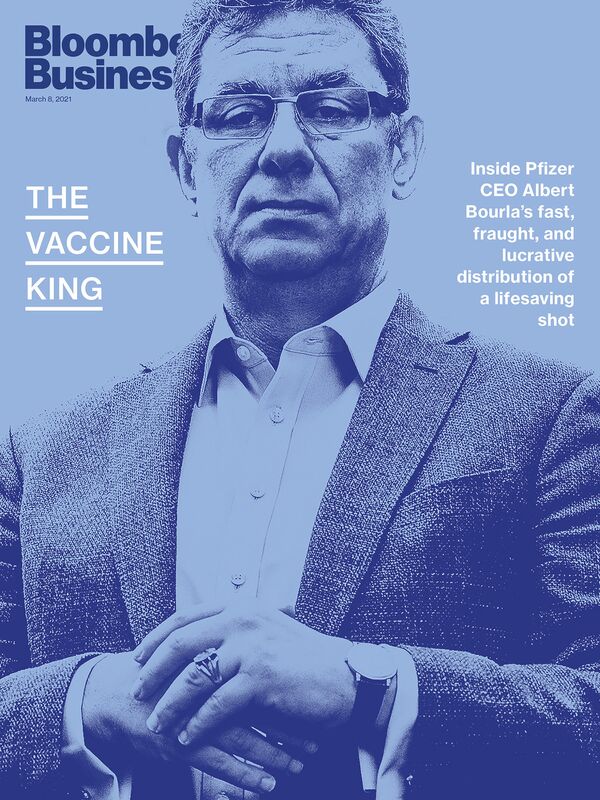
It’s not every day that a head of government goes to the airport to greet a cargo shipment, but the pandemic has changed many things. On Jan. 10, Israeli Prime Minister Benjamin Netanyahu motorcaded to Ben Gurion International Airport, southeast of Tel Aviv, to watch a shipment of 700,000 vaccine doses from Pfizer Inc. emerge from a blue-and-white El Al Boeing 787-9.
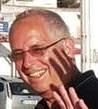
“This is a great day for the state of Israel, with a huge shipment that has arrived,” Netanyahu said, exuding a confidence few world leaders have mustered since the crisis began. “I agreed with my friend, Pfizer Chairman and CEO Albert Bourla, that we would bring shipment after shipment and complete the vaccination of the over-16 population in Israel during the month of March.”
Bourla had thrown Netanyahu a political lifeline. Faced with surging Covid-19 cases and an election in March, the prime minister latched on to Pfizer’s vaccine as his best hope to stay in office. Standing on the tarmac, he bragged that 72% of Israelis over the age of 60 had already been vaccinated, thanks to shipments that began in early December, and that more doses would come soon. That was because he’d struck a deal with Bourla to use his country as a test case for Pfizer’s vaccine.
Vaccine distribution still has the feel of a zero-sum game. Five days after Netanyahu’s victory lap, Pfizer told other non-U.S. customers that it would cut near-term supplies while it briefly closed its vaccine manufacturing facility in Belgium for an upgrade.
Panic and anger rippled through world capitals, nowhere more so than in Rome. Italy, which has suffered one of the highest Covid death rates and which had successfully set up a mass vaccination program and inoculated more people than any other European Union country, was waiting for new doses when Pfizer announced the cuts. The country’s virus emergency czar at the time, Domenico Arcuri, lashed out, complaining that Pfizer had cut its shipments by almost 30% just as Italy was about to start vaccinating people older than 80 en masse. He warned that Italy could take unspecified action against the company.
Days after Arcuri aired his grievances, Pfizer began shipping millions of doses to Israel. Within a week, Israel expanded its rollout to include 16- to 18-year-olds.
“Look, we are very angry,” Luca Zaia, president of Italy’s Veneto region—one of the areas most affected by Covid, with more than 9,800 deaths—told reporters, sitting in front of EU and Italian flags. He’d recently learned that supplies to his region would be cut 53% for that week. “I want to understand what Nobel Prize winner they paid to organize the distribution, or which principle or algorithm they used.”
It didn’t come from some algorithm. The vaccine allocation was the product of a company struggling to apportion doses while demand far exceeded supply, using an opaque process that appears to have involved a mix of order size, position in the queue, production forecasts, calls from world leaders, the potential to advance the science, and of course the desire to make a profit. “Everybody wanted [deliveries] in the first quarter, and we tried to allow discussions and negotiations to spread things so everybody would get in an equitable base,” Bourla says. The countries that hadn’t placed orders wanted a place in line, and those that had placed early orders wanted to buy more. “It was a constant negotiation,” he says. “Everybody wanted it of course earlier.” Pfizer says the agreement with Israel didn’t affect doses going elsewhere.
Daily First Doses Administered in Israel
Data: Government reports
Israel had two things going for it: Netanyahu had offered to pay roughly $30 a dose, about 50% more than the U.S. government, according to people familiar with the deal. He also agreed to share countrywide data on the vaccine, a two-dose product based on an experimental platform called messenger RNA, or mRNA. It’s being used almost exclusively in Israel, in what amounts to a large-scale effectiveness study. (Pfizer considered offering the same arrangement to Iceland, but the country didn’t have enough Covid cases to make a study meaningful.) By Feb. 22, Israel had given first doses to 47% of its 9 million people, making it the world leader. Italy, meanwhile, had administered first shots to 3.6% of its citizens.
Daily First Doses Administered in Italy
Data: Government reports
Bourla says the agreement with Israel will provide data that will transform the world’s understanding of how to end the pandemic. “They are trying to extract the scientific information that the whole world is waiting on right now,” he says. “We’ll get data on symptomatic and asymptomatic transmission very quickly.” Indeed, the news out of Israel on Feb. 24 was remarkable: The vaccine prevented 94% of Covid cases in almost 600,000 vaccinated people.
As the first company to develop an authorized Covid vaccine, which it did in partnership with Germany’s BioNTech SE, Pfizer wields enormous power. Bourla had been Pfizer’s chief executive officer only a year when the pandemic began and almost immediately faced choices no pharma executive would normally be making. Government policy matters, as does the behavior of individuals, but to some degree vaccine makers determine where infections will decrease and which economies will reopen first. Their customers are elected national leaders who’ve designed intricate vaccination programs with public-health officials, but those leaders are learning they’re at the mercy of what manufacturers such as Pfizer deliver.
In the past few months, Bourla has taken on an almost statesmanlike role, holding calls with heads of state, including former U.S. President Donald Trump, European Commission President Ursula von der Leyen, and Canadian Prime Minister Justin Trudeau. Netanyahu boasted in January that he’d spoken with Bourla 17 times, with the CEO even taking his calls at 2 a.m. Bourla says he’s talked to Netanyahu “even more” since then.
Pfizer’s first-out-of-the-gate status has also offered Bourla a sales opportunity like none other. He’s locked in orders from more than 60 countries on undisclosed commercial terms. Pfizer has supplied 95 million doses globally. It’s executing on one of the most ambitious scale-ups in pharmaceutical history to meet the relentless demand, boosting production to 2 billion doses in 2021—more than it has agreements to sell at this stage. It expects the vaccine to generate at least $15 billion in revenue in 2021, putting it—under the brand name Comirnaty, an ungainly blend of “Covid,” “mRNA,” and “immunity”—on track to be one of the biggest-selling drugs in the world.
There’s no rulebook for how a global corporation should behave during a pandemic. Pfizer accomplished something extraordinary, exceeding nearly everyone’s hopes, and is now doing what pharma does: mass-marketing lifesaving products at prices the market is willing to pay. It’s not bound to serve a global public-health agenda. All that said, there will one day be an autopsy of the pandemic, and a central question might be how a single company came to hold such power over so many.
In May 2020 the Trump administration announced the launch of Operation Warp Speed. Moncef Slaoui, a former GlaxoSmithKline Plc executive, joined as chief adviser to OWS to figure out which vaccines to back. He had an uncommon familiarity with mRNA technology from serving on the board of Moderna Inc., which had spent years researching the platform. No drug using mRNA technology had ever been approved.
Slaoui knew Pfizer might be a contender after it announced its decision to collaborate with BioNTech, another mRNA pioneer, but he didn’t know Bourla. When they first spoke, in June 2020, Bourla made it clear he wasn’t interested in taking money for research and development as the other companies OWS was evaluating were. Instead, he wanted an advance purchase order from OWS to guarantee a buyer if Pfizer succeeded. The company’s $50 billion in annual revenue meant it could afford to take a flier. Bourla has said it wasn’t an easy decision, but he felt it liberated scientists from bureaucracy to get faster results. “Albert was very clear that they had what it takes to deliver,” Slaoui says.
Pfizer’s confidence showed early on. It began marketing the vaccine globally in May, soon after it started safety testing. “The process started in the very early days when we reached out to every single country,” Bourla says. “We started discussions in all continents of the world.” The U.K. was the first country to do a deal, agreeing on July 20 to buy 30 million doses (later upped to 40 million) to be delivered in 2020 and 2021. As with most of Pfizer’s deals with individual countries, the terms were not disclosed.
Two days later, Pfizer announced a $1.95 billion order from Operation Warp Speed for 100 million doses, pending authorization of its vaccine from the Food and Drug Administration. The straight advance-purchase order set Pfizer apart from all the other OWS candidates. Moderna, for example, got $2.48 billion from the U.S. government, including $955 million for clinical development and manufacturing and payment for 100 million doses. By contrast, Pfizer has spent $2 billion of its own money on development. Company executives came out of the gate asking for a higher price per dose than the $19.50 they eventually agreed on, according to former senior administration officials who declined to be named because the discussions were confidential.
Higher prices were floated in Europe, too. Last summer, Pfizer and BioNTech started off asking for €54 ($65) a dose in negotiations with the EU, a person familiar with the talks says, confirming German media reports. BioNTech co-founder Ugur Sahin told Bild that initial ballpark figures were based on rough calculations of production costs before they figured out how the manufacturing would work. They later settled on a range of €15 to €30 a dose for “industrialized countries,” depending on order size.
Free from the strings attached by a government grant, Pfizer could move faster. “We made the early decision to begin clinical work and large-scale manufacturing at our own risk to ensure that product would be available immediately if our clinical trials prove successful,” Bourla said when announcing the U.S. deal. Less than a week after securing the U.S. contract, Pfizer started its final-stage trial, saying it aimed to seek regulatory review by the FDA as early as October. Moderna started its final trial the same day, but a longer interval between doses—28 days to Pfizer’s 21—meant that, all other things being equal, Pfizer was positioned to report results first.
The orders kept rolling in. A few days after the trial started, Japan ordered 120 million doses to be delivered in the first half of 2021. In early August, Canada made a deal.
In late August, Pfizer shared early data showing that participants generated a strong immune response to the vaccine, and even more countries got in line. In early September the company agreed to “potentially supply” the EU with as many as 300 million doses, but the bloc dragged its feet on finalizing the deal. The Gulf state of Qatar placed an order a few weeks later.
Bourla had been consistently saying the company expected to report results from the final-stage trial by the end of October, which Trump seized on as he sagged in the polls in the homestretch of his reelection campaign. “We’re going to have a vaccine very soon. Maybe even before a very special date,” Trump said in early September. Concern that Pfizer was rushing the trial at the expense of safety checks mounted. Pushing back at the perception that the Trump administration was pressuring the company, Bourla promised to make safety paramount. “I wanted to speak directly to the billions of people, millions of businesses, and hundreds of governments around the world that are investing their hopes in a safe and effective Covid-19 vaccine,” he said in an open letter. “The vaccine must be proven safe.”
Pfizer ruffled feathers with some inside Operation Warp Speed. The company had been pushing for the U.S. government to place an additional order of 100 million doses, but OWS officials were wary. The company was already failing to meet its production targets for November, for reasons that were unclear, according to the former senior administration officials. Pfizer says it kept the government informed about production.
When Pfizer announced the results of its final-stage trial six days after the election, the news was huge: The vaccine was more than 90% effective at preventing Covid symptoms. Slaoui says Bourla called him right before Pfizer issued a news release at 6:45 a.m. on Nov. 9, and he was so excited that he had to refrain from shouting for fear of waking up other guests in his hotel in Washington. Nevertheless, amid the euphoria was some bad news: Pfizer warned that it would be able to produce only 50 million doses worldwide by the end of the year, instead of the 100 million it had projected.
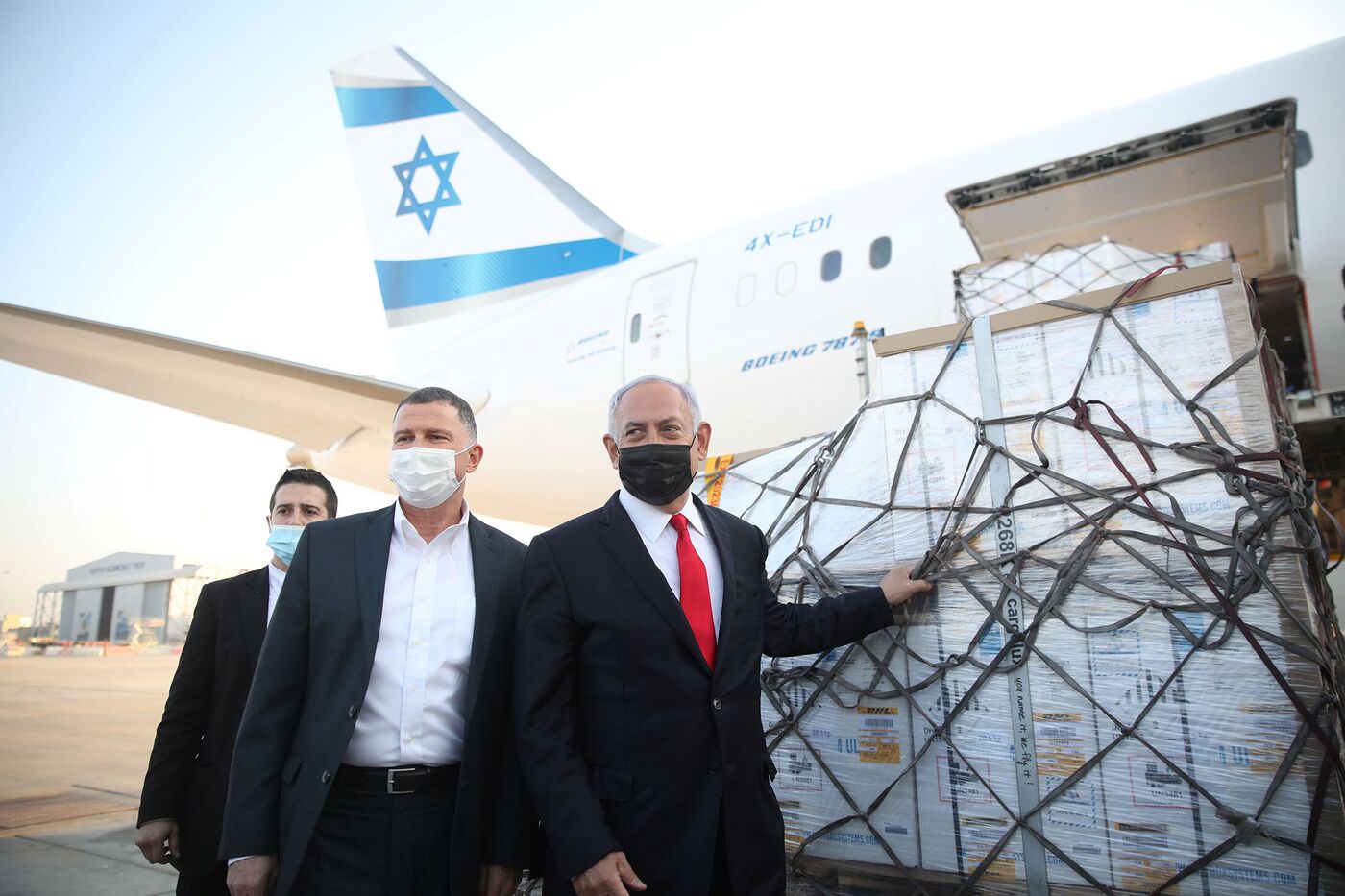
Pfizer was running into major production problems at its 1,300-acre campus in Kalamazoo, Mich., where the company set up a freezer farm the size of a football field to store doses at the required -75C (-103F). Scaling up manufacturing of a new product with a new technology required a steady flow of raw materials. It turned out Pfizer needed the government’s help after all. To clear supply chain holdups, company executives were pressing Warp Speed for an order under the Defense Production Act, which would give it priority access to suppliers. Other OWS candidates had been taking advantage of the DPA for months. OWS hesitated. The administration officials say they were worried that Pfizer would use its size and market clout to muscle out Moderna in the supply chain if it got equivalent status under the DPA.
Pfizer’s production holdups had a huge impact on the U.S. vaccine rollout. Before the trial results were announced, OWS had been expecting 20 million doses in November and 20 million in December. Instead it got nothing in November and 20 million doses in December, some of them flown in from Pfizer’s production site in Belgium, to make up for the gaps from Kalamazoo.
The U.K., which was the first country to authorize the vaccine, on Dec. 2, had been expecting 10 million doses by the end of the year but got about half that. Despite the supply challenges, Pfizer announced right before Christmas that it had agreed to supply the U.S. with another 100 million doses. At the same time, government officials finally agreed to provide the company with priority under the DPA.
In late December a flurry of news stories from the Middle East revealed that Pfizer had contracted to sell millions of doses to countries in previously unreported deals. Dubai got its first doses flown in from Belgium and announced it would aim to inoculate 70% of its 3.3 million people with the Pfizer vaccine. Officials in Saudi Arabia told TV broadcaster Al Arabiya they were expecting 3 million Pfizer doses, with a third of those to be delivered by the end of February. Oman ordered 370,000, paying $30 a shot for early supplies arriving in December and $24 a shot for later shipments, the health minister told a government news outlet. This appeared to be one of the highest prices outside Israel, though lack of disclosure makes it impossible to say for sure.
Pfizer executives found a partial fix to their supply problem in the vaccine vials themselves. They just needed authorization to change the labels to say the vials contained six doses instead of five. It’s standard practice in the pharmaceutical industry to overfill vials slightly to avoid running the risk of undershooting and violating FDA labeling laws. Pfizer was overfilling each vial by just enough for an extra dose if vaccinators used what are called low dead-volume syringes.
But not all vaccination sites had the syringes. Moreover, the company’s application to the FDA and other regulators specified five-dose vials. Pfizer needed to generate data showing the extra shot could be reliably extracted.
The company did that and then began pressing FDA officials to change the authorization to recognize the sixth dose. OWS officials were against the change, anticipating nightmare logistical implications right when they were starting the biggest mass vaccination campaign in U.S. history, the former senior administration officials say. Pfizer’s vaccine needed to be kept at subarctic temperatures—it was already difficult enough to distribute without last-minute rejiggering. (Recently the FDA announced that it can be kept at normal freezer temperatures for up to two weeks.)
The company’s lobbying efforts succeeded. On Jan. 6 the FDA revised its fact sheet, allowing the sixth dose and effectively boosting Pfizer’s production by 20%. Regulators in Europe, the U.K., and elsewhere followed suit. The U.S. and the U.K. had managed to source the syringes, but other countries were left scrambling. Sweden and Japan complained they didn’t have enough special syringes to extract the sixth dose and warned it would likely mean millions of doses would be thrown away. Austria was also short of supplies.
Bourla defended the policy change by saying the company had validated 36 syringe-needle combinations that could get the extra dose out. “It would be criminal if we can use six doses, and we are throwing away one vaccine that can save lives right now,” he told Bloomberg in late January.
The modification was a huge win for Pfizer. The company had promised to supply the U.S. with 100 million doses by the end of the first quarter, and it now says it can provide 120 million. Because nations pay by the dose, the move also delivered an instant 20% price hike per vial.
When Bourla took the helm at Pfizer in January 2019, his mission was to get the company to focus on blockbuster drugs and to fend off a potential battle with the Trump administration over drug pricing. The coronavirus immediately gave him a new focus. Pfizer’s little-known partnership with a German biotech turned it into a hero of the pandemic. There was considerable doubt that mRNA vaccines would work, but Bourla’s willingness to gamble on the new technology paid off.
While Israel was swimming in Pfizer vaccines in late January, other countries were struggling to find out when their deliveries would resume. On Jan. 8 the EU said it had doubled its order by securing the purchase of another 300 million doses. A week later, Pfizer announced the supply cut and the Belgian shutdown. Within days, it informed officials in Canada—which had recently doubled its order to 40 million shots—that the country would receive no doses the following week. Prime Minister Trudeau spoke with Bourla on Jan. 21, but the call didn’t unlock additional supplies. Desperate for doses, he agreed to take vaccines from Covax, the facility backed by the World Health Organization to provide 2 billion doses to low-income countries. Canada was the only Group of Seven country to do so. Opposition politicians accused him of grabbing doses meant for countries that couldn’t afford to do bilateral deals.
Bahrain, Dubai, and Saudi Arabia also reported delays in shipments. “Pfizer supply has been a global challenge,” Amer Sharif, head of Dubai’s Covid-19 Command and Control Centre, told Bloomberg TV. “There have been a lot of discussions with Pfizer representatives in the region.” Oman was cut, too. “Do not panic,” Ahmed bin Mohammed al-Saidi, Oman’s health minister, urged at a press conference on Feb. 1. “We were assured that the next consignment will be here before the middle of this month.”
The Gulf states have weathered the delays without major consequences, because their rates of infection are relatively low. Mexico, with surging cases and the world’s third-highest number of deaths, has felt Pfizer’s supply cut more profoundly. Having agreed in early December to buy 34 million Pfizer doses, the nation started vaccinating in late December, the first country to do so in Latin America. Then Pfizer’s shipments stopped for three weeks, until roughly 500,000 doses for health-care workers arrived in mid-February. It hadn’t even started vaccinating the elderly. On Feb. 2, Mexican Foreign Minister Marcelo Ebrard criticized Pfizer for holding back doses “that are already signed and paid for.”
The world was waiting for Pfizer to retool its sprawling facility, the size of several sports stadiums, on the outskirts of the tiny Belgian town of Puurs. Last year, Pfizer hired several hundred more staff, bringing the total to more than 3,000, as it geared up for production. That wasn’t enough to keep up with the crush of orders. The partial closure of the plant lasted almost two weeks.
“When there is a question of death and life, when there is a question of the global economy, the demand will always be bigger,” Bourla says. “You will get complaints.” Pfizer wasn’t alone in cutting supplies to Europe—AstraZeneca Plc later also fell well short on its promised deliveries to the EU—but Europe was relying on the American company to start its rollout. “There’s no doubt in my mind that there is anxiety, there is stress, there is pressure,” Bourla says. “The voices are becoming louder, and people will try to find the scapegoats.”
In the Rome region, the Pfizer cuts delayed the vaccine campaign for people older than 80 by a week, with first shots administered on Feb. 8. The knock-on effect means some of the most vulnerable are waiting until spring to get their first doses. Salvatore Parisi, 94, a retired Rome courthouse clerk, is sheltering at home until his April 3 appointment at a hospital for his first Pfizer shot, with a second dose scheduled for April 24. He’s holding out hope that doses might become available sooner at his family doctor’s office. “Every week we call. ‘Is there something new?’ ‘No, no,’ ” he says via telephone to questions relayed by his 79-year-old wife, Maria Sinibaldi, because his hearing isn’t what it once was. “I’m a little scared but not too angry. I’m just waiting for a call from my doctor.”
The EU had developed a strategy of pooling vaccine procurement across the 27 member states. It signed supply deals with six vaccine developers. With Pfizer, the European Commission agreed to a framework for supplying countries quarterly, leaving week-to-week decisions to the company and each nation, says Stefan de Keersmaecker, a commission spokesman. When Pfizer made its cuts in January, that arrangement led to a patchwork of supply gaps across the Continent, which caused anger to mount against the drugmaker. A Pfizer spokeswoman said the cuts were made with the understanding that the Belgian factory revamp would lead to “significantly increased volumes” before the end of March.
EU member states also agreed not to negotiate bilateral agreements with drug companies. That didn’t stop Germany from striking a separate preliminary agreement with BioNTech for 30 million doses, after it gave the company a €375 million grant in September. (Pfizer is not party to that agreement.) The EC says it hasn’t seen Germany’s deal, which hasn’t been finalized. “Parallel negotiations aren’t allowed in our vaccine strategy,” De Keersmaecker says. “Legally it’s not allowed.”
German Chancellor Angela Merkel tried to defuse Europe’s vaccine crisis by holding a videoconference with commission officials and drugmakers including Pfizer executives on Feb. 1. Pfizer says it got back on schedule with the EU at the end of January. Bourla says countries started getting more doses by late February.
Striking deals and mass-producing a new vaccine in the middle of a pandemic was never going to be straightforward. “This is the fastest any vaccine has been approved and rolled out, the fastest any vaccine has been mass-administered to people, the fastest response to a pandemic, and probably the fastest manufacturing ramp-up ever,” says Jonathan Miller, an analyst at Evercore ISI. “I don’t think this could have gone much faster than it did.”
Public-health officials have warned that rich countries making deals with companies such as Pfizer will restrict access to the vaccine for those who can’t afford price-is-no-object deals. In January, WHO Director-General Tedros Ghebreyesus criticized bilateral deals and implored high-income countries to share doses, warning that “the world is on the brink of a catastrophic moral failure.” It wasn’t until the end of that month that Bourla announced an agreement with Covax. The deal, for 40 million doses, represented less than 2% of Pfizer’s projected 2021 production. Other vaccine developers have come in bigger. AstraZeneca has committed 170 million doses of its vaccine, while the Serum Institute of India Pvt Ltd. has agreed to supply 1.1 billion doses of its versions of the AstraZeneca shot and another vaccine developed by the American company Novavax Inc., pending authorization. Covax is also finalizing commitments for hundreds of millions of additional doses from Johnson & Johnson and Novavax.
No one in public health says the current global rollout of Covid vaccines is the best way to beat the pandemic. “In an ideal world, what we would have had is one global mechanism where manufacturers would have said, ‘We’re all going to supply one entity,’ and governments said, ‘We’re all going to procure through one entity,’ ” says Katherine O’Brien, the WHO’s technical lead on Covax. “It makes much more sense.”
Bourla, of course, doesn’t run a public-health agency. He answers to his shareholders. Locking in orders early, sometimes at a higher price for those that can afford to pay more, is what a CEO does. Pfizer has said it expects initial profit margins in the upper 20% range, which is high for a vaccine. Moderna has charged more for its shot outside the U.S., but its limited manufacturing capacity means it’s done a fraction of the deals Pfizer has, with most deliveries expected only in the spring. AstraZeneca has struck dozens of bilateral agreements, but it’s promised not to make a profit during the pandemic; it’s selling its shot for a few dollars a dose. If there’s a challenger to Pfizer’s primacy, it might be the recently authorized vaccine from Johnson & Johnson, which is highly effective, requires simple refrigeration, and is administered in a single shot.
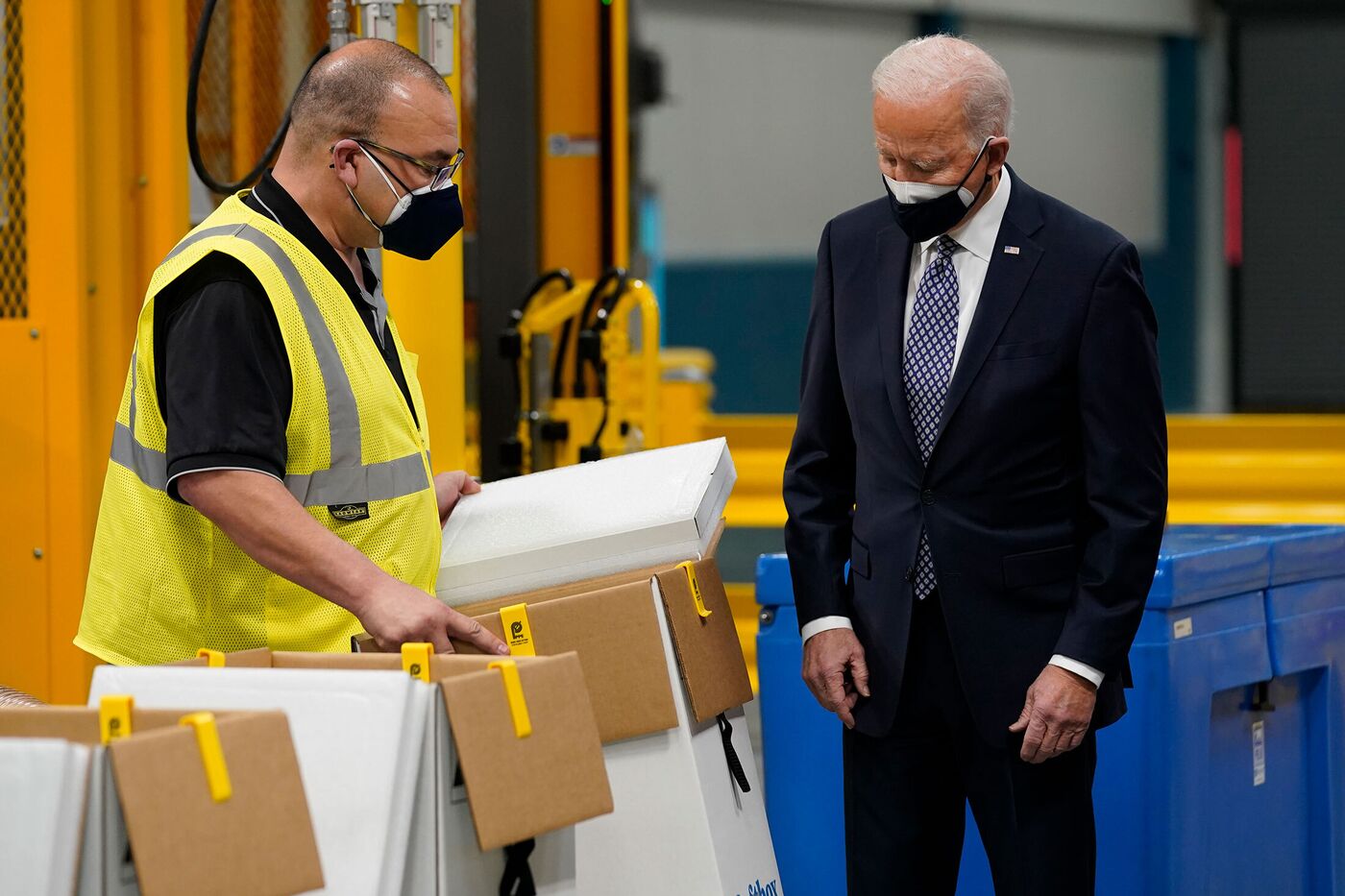
For now, though, Pfizer has unparalleled brand awareness, even if “Comirnaty” doesn’t quite roll off the tongue. (The name might not even be used in the U.S.; brand names are established only after full FDA approval.) In late February, President Joe Biden toured Pfizer’s Michigan plant and reassured the public that the government is working overtime to get everyone vaccinated. To meet the challenge, Pfizer is continuing to increase production. The company now expects to be able to ship 13 million doses a week by mid-March, up from 4 million to 5 million a week in early February.
Speaking with investors and analysts after releasing earnings results in January, Bourla and other Pfizer executives talked expansively about a post-pandemic world in which the company would be able to charge more for the vaccine. Vaccine prices are normally about $150 to $175, said Chief Financial Officer Frank D’Amelio. “We’re in a pandemic pricing environment,” he said. “Obviously we’re going to get more on price.”
With new variants of the coronavirus spreading, the need for regular booster shots is highly likely. Pfizer is working on a new vaccine that can target the South African mutation of the virus, which may infect some people who’ve been vaccinated. The prospect of the world’s population of almost 8 billion needing boosters puts Covid vaccines into an entirely new league. Pfizer expects to be able to make its vaccine easier to store and ship—it’s working on a freeze-dried version. The company is preparing for what Bourla calls an “open market” in which supplies are plentiful and people can choose which vaccine they want.
“I would feel very comfortable that we will have the lion’s share of the market, because we are first and we are best,” Bourla said on his earnings call. “In scenarios that Covid will move from a pandemic into more of a normal type of vaccination business, it is very clear that Pfizer will have a key advantage, not only because of the strength of data but also because we have developed significant brand equity and trust with the people.”
The shortage will eventually subside. Until then, Bourla occupies a strange position. He’s a savior, the bold leader of a company that stepped up. But he promised desperate governments doses he couldn’t deliver on time. As supplies increase, hard feelings may fade, but Bourla’s decisions during the height of the pandemic will be the subject of study. There was a vacuum in global leadership. He and his company filled it. The world needs better solutions before the next public-health crisis comes around. —With Ivan Levingston, Sylvia Westall, and Naomi Kresge
Read more: Vaccine Shipments Present a Security Challenge Worthy of a James Bond Film