Wednesday, September 1, 2021

African artists are banking on a skyrocketing contemporary art market - CNN Style

African artists are banking on a skyrocketing contemporary art market - CNN Style

African artists are banking on a record-breaking contemporary and modern art market

Updated 1st September 2021

  • untitled abdoulaye aboudia diarrassouba 2019
  • aboudia 02 02 2012
  • RESTRICTED untitled aboudia 2015
  • world on its hind legs william kentridge 2017
  • RESTRICTED samuel fosso la femme americaine
  • Vumedi by El Anatsui
  • vumedi el anatsui 2020
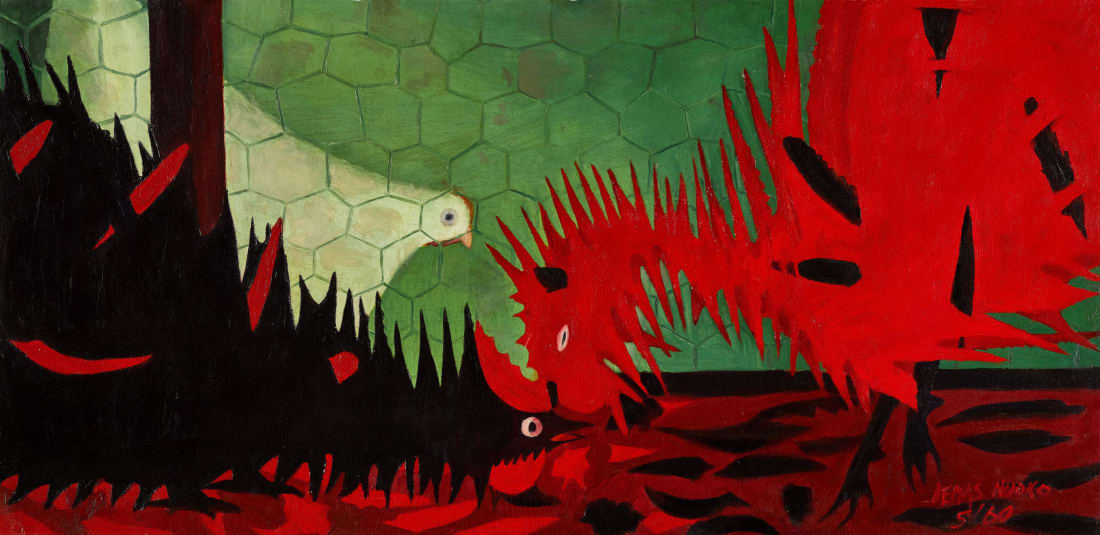
  • RESTRICTED demas n nwoko folly
  • RESTRICTED atlas ben enwonwu
African artists are banking on a record-breaking contemporary and modern art market
SHARE
Written byDaniel Renjifo, CNN
For Abidjan-based artist Saint-Étienne Yéanzi, the continent's social and political reality has sparked a creative evolution for contemporary African artists, he says, giving them confidence to work and stay in Africa.
The contemporary art market in Ivory Coast and across sub-Saharan Africa has captured collectors' imaginations on a global scale, translating into profits for many artists like Saint-Etienne. He says the average value for individual pieces of his work increased from roughly around $8,000 to $60,000 in his seven years as an artist.
Perhaps the biggest example of this exponential growth is Ivorian rising star Abdoulaye Diarrassouba, better known as Aboudia. "He is one of those artists that has evolved well in recent years," says gallery owner Cécile Fakhoury, who opened her gallery in Abidjan, Ivory Coast in 2012 and has witnessed the ways Aboudia's vibrant style of graffiti-like painting -- reminiscent of the works of the late Jean-Michel Basquiat -- has propelled his career.
"Today, the paintings we see here (in the gallery) are between $47,000 and $180,000," she adds.
In May, Aboudia's "Untitled (2015)" sold for $232,000, a whopping 835% over presale valuation estimates and shattering his personal record set last year.
Other established African artists from Ethiopia, Zimbabwe and Nigeria recently grabbed international headlines at the bi-annual Sotheby's Modern and Contemporary African art auction in London. Renowned Nigerian artist Ben Enwonwu's "Atlas" sold for over half a million dollars at a Sotheby's auction in March, setting a new world record for an African sculpture.

Record-breaking art

"2020 was our most successful year yet", says Hannah O'Leary, Sotheby's head of modern and contemporary African art. Despite being virtual due to the pandemic, last October's event sold over $4.4 million of art.
In March, Sotheby's again exceeded presale estimates by 40%, selling $3.7 million worth of art from 34 countries. O'Leary says that since the African art auction's inception in 2017, the company has broken 90 world records.
"Every time we break one of these records, we are setting new standards and elevating the reputation of our artists,'' she adds.
How an Ivorian art revival is bolstering prices
For Idelphonse Affogbolo, a Beninese collector living in Ivory Coast, buying art deepens the artist's creativity, but also more fairly appraises African artists against their international counterparts. "There are contemporary artists like (Jeff) Koons and others who are being snatched for $20 million," Affogbolo says. "I hope that one day we will have artists of recognized talent who can achieve such selling prices."
Meanwhile in the local galleries of Abidjan, Fakhoury believes that the contemporary African art market will continue to be mostly driven by international sales, but also by the will of a young generation of collectors and artists who see the potential.
"This hyper-varied young generation, the diaspora who studied abroad, who saw that there is an art market -- they realize there's a scene, a story, and they begin to take an interest in it," she says.

What to Do in Your Edible Garden After the Summer Harvest

What to Do in Your Edible Garden After the Summer Harvest

What to Do in Your Edible Garden After the Summer Harvest

You’ve picked every pepper and harvested the last basket of tomatoes from your summer garden. Now what?

Your end-of-season care plays a big role in whether or not your edible garden will continue to perform well in the future. This guide to post-harvest garden care — including how to restock soil nutrients, when to mulch, which plants not to compost and more — will help set up your edible garden for success for years to come.
Lore Patterson
1. Finish the Harvest

When you’re ready to finish up your summer garden, pick all remaining fruit, veggies and edible leaves. Many fruits, such as tomatoes, will continue to ripen once they’ve been picked. Have an end-of-summer feast and make plans to preserve, freeze or give away excess produce.
Ann-Marie Powell Gardens Ltd
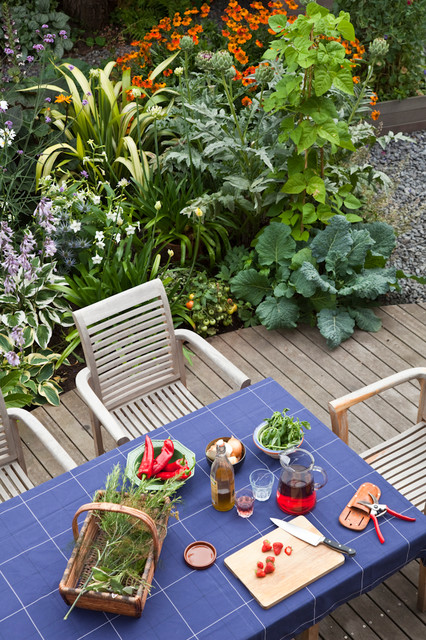
Dry herbs like thyme, basil, lavender and rosemary to use in winter. To harvest and save the seeds of beans and squash, allow the fruits to fully ripen and dry on the vine before picking. Store the seeds in a labeled jar or envelope in a cool, low-moisture space.

Shop for food storage canisters and jars on Houzz
Find Pro For More Ideas
Need a pro for your landscape design project?
Let Houzz find the best pros for you
Sweet Smiling Landscapes
2. Remove Summer Edibles, Diseased Plants and Weeds

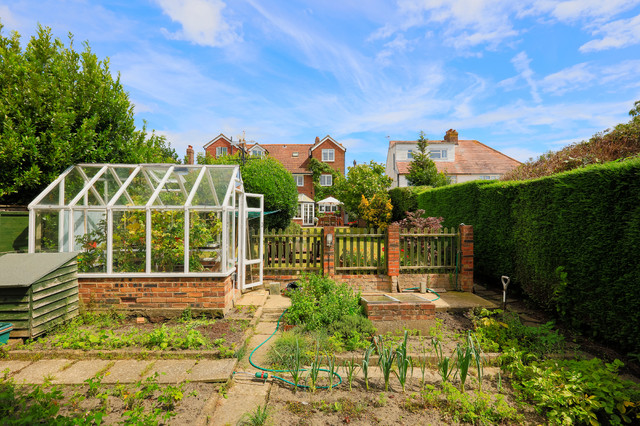
Strip plants of any remaining fruits and seeds and remove them from garden beds. You can add the plants to a compost pile, if you have one, or toss them in the green wastebin. (Fall is a great time to start composting.) Remove and discard any plants that show signs of disease. Plants covered in powdery mildew, which often shows up as dusty white spots on leaves, should be added to the garbage or yard-waste bin — not the compost pile.
Jocelyn H. Chilvers
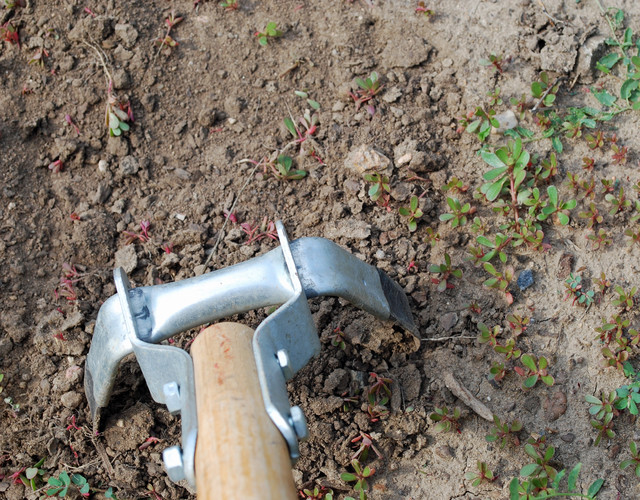
Once soil is exposed, use your hands or a garden hoe to remove weeds that have been hiding under summer plants. Weeds that have not yet formed seeds can be composted; those that have set seed should be thrown away.

Learn the natural ways to get rid of weeds
Steve Masley Consulting and Design
3. Empty and Clean Pots

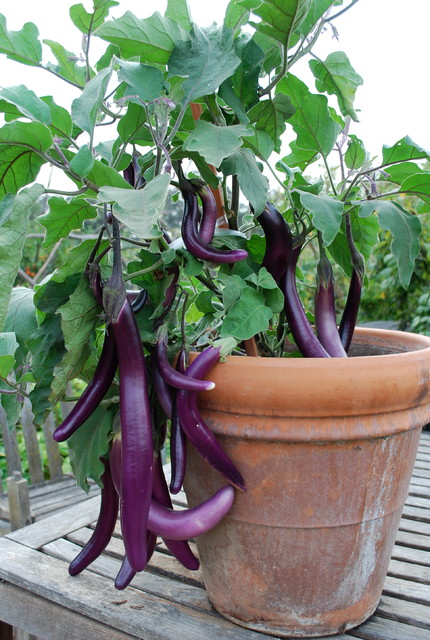
After harvesting all remaining fruit or edible leaves, remove tired or dying summer herbs and vegetable plants from containers.

If the plants show no signs of disease, you can empty the containers’ soil onto the compost pile or onto garden beds. Spread out the soil with a rake and remove any root balls by hand.

Clean pots with a brush and a solution of vinegar and soapy water. Store them upside down in a sheltered area until next spring or fill them with fresh potting soil for new cool-season plants.
Smith Studios Ltd
4. Replenish Soil Nutrients

Good soil is the secret to having a successful and productive edible garden year after year. The herbs and vegetables you grew this summer have spent months taking up soil nutrients to fuel their growth and fruit production. If you plant the same crops in the same soil next year without adding nutrients back to the soil, the plants won’t grow as tall or produce as many fruits and veggies. But if you take care of the soil and replenish its nutrients, you can maintain a healthy edible garden season after season.
Steve Masley Consulting and Design
Soil amendments and cover crops are the two most common ways to return nutrients and organic material back to the soil.

Soil amendments. If you have a supply of homemade compost, now’s the time to put it to use. Otherwise, you can pick up bagged compost at your local nursery. You can also find organic fertilizers designed to replenish nitrogen, phosphorous and potassium for specific crops. Spread a thick layer of compost over the top layer of soil. Add other amendments as needed according to package instructions.

If your soil felt heavy when pulling out plants, it may also benefit from even more organic material, such as compost, straw or fully dried leaves.

After adding compost, soil amendments and any other organic material, turn over with a shovel, working everything into the soil.

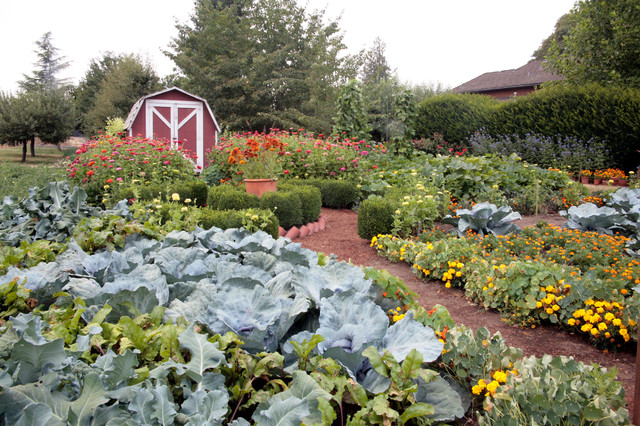
If you live in a mild-winter region, you may choose to replant beds at this point with cool-season crops, such as peascarrots and cabbages. In cold-winter areas, you may allow the beds to rest until spring planting.
Oakley Gardens
Cover crops. You can also return nutrients back to the soil with the help of cover crops. Among their many benefits, cover crops help improve soil texture, prevent erosion, suppress weeds and add important nutrients to the soil wherever they are planted.

A cover crop is not grown for harvesting. Its primary purpose is to replenish soil nutrients and organic material without the use of added fertilizers. Rye grass, oats, barley, clover and nitrogen-fixing legumes are commonly used as cover crops. Planting a cover crop will take a bed out of rotation for a season, but the soil will be healthier for the next round of planting.

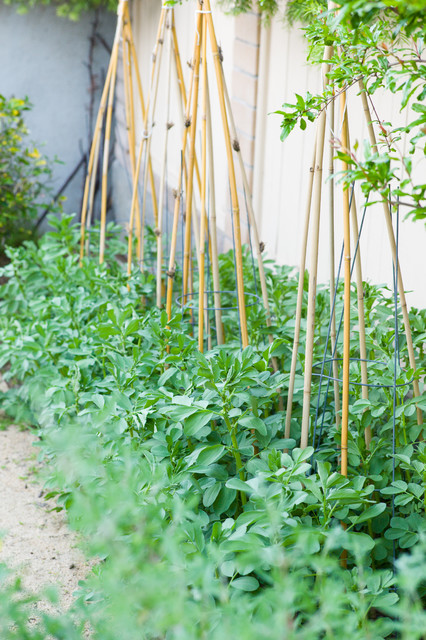
Fava beans, shown here, are easy cover crops to try in a small garden. Plant a bed with favas, allow them to produce pods for harvest (if you want to eat them) and then cut or mow the plants on the bed, allowing the fallen cuttings to stay on the surface of the soil as a “green manure.” Till the organic matter into the soil two to three weeks before spring planting to give them time to decompose and help improve the soil.
Renee Wilkinson Landscapes
5. Mulch

If you’re not using a cover crop over winter, spread a layer of bark, straw or dried leaf mulch over the soil’s surface. The mulch will help suppress weed growth, keep the soil warm for any newly planted cool-season crops and maintain soil moisture.

Learn more about using mulch in the garden
Devore Associates
6. Cut Back Vines, Brambles and Other Perennial Crops

Cut back thin or straggly vines, unwanted side shoots and larger vines on grapes, kiwis and other fruit vines.

For brambles, such as blackberries, boysenberries and raspberries, choose four to six of the healthiest, most vigorous canes to keep on each plant, cutting all others to the ground.

Thin strawberry beds by dividing plants and replanting them in rich, well-draining soil where there is room to spread out. As asparagus and artichokes start to naturally die back at the end of the season, cut back plants to about 6 inches above the ground.
Sage Ecological Landscapes
7. Fertilize and Mulch Perennials

All of the edible perennials mentioned — grapes, brambles, strawberries, asparagus and artichokes — benefit from sprinkled organic or synthetic fertilizer at the base of each plant and a layer of bark or straw mulch to protect them from cold winter temperatures.
Mark Hickman Homes
8. Clean and Store Garden Tools and Supplies

Store trellises, tomato cages and other garden supplies in a garden shed or covered area over winter. Organize tools and give them an end-of-season cleanup.

Dip the metal parts of shovels, spades, hand trowels and pruning shears in a diluted bleach solution to prevent the spread of diseases, then wipe dry. Sharpen tool blades that need it. Condition both the metal and wooden parts of tools with a light coating of oil to prevent rust and to keep handles hydrated. Store tools in a garden shed, garage or covered area.

How to clean and care for garden tools
Fifth Season Landscape Design & Construction
9. Plan for Next Year

Don’t forget to take time to make notes for next year’s warm-season edible garden. Ask yourself what your favorite varieties or most successful plants were. Were there any plants that did not thrive? Could your next edible garden benefit from more pollinator-attracting plants? If so, plan on planting them around the edges. Jot down these garden notes now so you’ll have a plan for success next spring.
Joanne Winn Garden Design
Tell us: What do you do as part of your end-of-season edible garden cleanup? Share tips in the Comments.