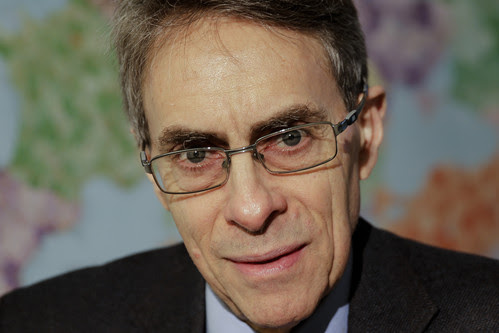
Ken Roth retired in August after almost 30 years as the executive director of Human Rights Watch. In those three decades, Roth turned HRW from a 20-person group called Helsinki Watch focused on freeing dissidents in the former Soviet Union to a global organization with more than 500 staff working on some 100 countries. Roth helped develop and refine HRW’s methodology of legal-standard human rights research backed by a global network of advocates that name, shame and demand change from government’s implicated in human rights abuses. In the process Roth became an inexhaustible marketer of the HRW brand who would rub elbows with world leaders at Davos on one day and get sanctioned by the Chinese government on the next. But Roth’s tenure at HRW wasn’t without controversy. The organization admitted in 2020 that under Roth’s watch it had accepted a donation on the explicit condition that the funds not be used to support HRW’s work on LGBT rights in North Africa and the Middle East. HRW later returned that donation and implemented a policy that explicitly forbids such conditions on donor contributions, but the credibility damage was done. Roth also made headlines in January when the Harvard Kennedy School withdrew a fellowship it had offered him at the Carr Center for Human Rights. While Harvard gave no reason for that move, Roth suspected it was a reprisal for HRW’s outspoken criticism of Israel’s human rights record. Roth launched a high profile media campaign decrying Harvard’s decision, prompting the school to reverse course later that month. I spoke with Roth about his role in the rise of the global human rights movement. In that conversation Roth shared how his own family’s narrow escape from authoritarian terror steered him into a career defined by facing down dictators and fighting to bring them to account. The following interview has been condensed and edited for clarity. Who’s winning in this battle of autocracies like China and Russia against democracies and what the Biden administration calls the “rules-based international order”? The common wisdom is that autocracy is in the ascendancy and democracy is in decline. And that is just not where we are right now. So many autocrats are illustrating the danger of being surrounded by sycophants, stifling debate and insisting on making all decisions yourself. That's how you get [Russian President] Vladimir Putin's invasion of Ukraine, [Chinese paramount leader] Xi Jinping’s zero-Covid policy, followed by zero preparation for post-Covid or [Turkish President Recep Tayyip] Erdogan’s amnesties for construction-code violators even in earthquake zones. So people are seeing through the supposed benefits of autocracy. The old view that our democracy is too slow and divisive and messy ignores the fact that democracies allow public debate and are able to correct policy errors more effectively than autocracy. Which is why we've seen this outpouring of popular support for democracy in so many countries around the world. If you put yourself in the shoes of an autocratic, it's a hostile environment. You’ve met a lot of abusive authoritarians over the decades. Any stand- out encounters? I met with Joseph Kabila, who was President of the Democratic Republic of Congo, three different times. But in the last meeting I had with him he was refusing to step down even though he was term limited. And he was super corrupt and increasingly repressive: There were protests against his staying in power and his police forces were shooting the protesters. So I said, “Mr. President, I see two paths before you. You can accept a transition, allow an election to take place and be the first Congolese leader to oversee a democratic transition. You will be a respected figure, you'll be sent on African Union missions, you will retire as one of the founders of Congolese democracy. Or you can continue sliding into a forever presidency. And there'll be protests and you'll keep shooting the protesters, and things will get more and more ugly. You're probably going to be forced from power. And at that point, you're going to face the real likelihood of prosecution.” I remember him saying “Don't assume anything.” By which he meant, don't assume that I'm going to hang on forever. He ended the meeting by saying, “Pray for me.” And he ultimately did agree to step down. I can't take credit for this; I was one of many people pushing, but he stepped down. It was an example that somebody who was very corrupt, quite repressive — it was possible to push them in a positive direction. You started your career as a lawyer and a federal prosecutor — what were you thinking? I thought of law as a route to political activism. It didn't start off very auspiciously, because I signed up for the one human rights course offered by Yale every year and each year, they canceled it. So, to this day, I've never taken a human rights course. But what I did for Human Rights Watch has many parallels to what I did when I was a courtroom lawyer. You have to investigate and present the facts in the most compelling way you can, applying the law to those facts and persuading somebody to judge them. In the case of domestic litigation, it's all within the confines of the courtroom. And for human rights, it's within the global public domain — public opinion and government officials. What does the controversy over your Harvard fellowship say about the career risks of challenging Israel's human rights record? I'm actually quite worried about it. I had the visibility to make a stink in the media. And so the Kennedy School team reversed itself. But most scholars and most students don't have comparable visibility and there is broad fear that if you criticize Israel, you put your career in jeopardy. And that needs to be addressed. How did Human Rights Watch change in your 30-odd years there? It was much smaller than when I started – I think there were 20 staff. It was tiny. The other huge change has been the change in communications technology. When I started, international phone calls were expensive. International travel was expensive and done rarely. And you literally wrote letters to people. Even investigations involved letter writing to government officials. When the fax machine emerged it was this major technological revolution because it enabled you to send an entire piece of paper worth of information for the cost of a quick international phone call. And that was huge. We would smuggle fax machines behind the Iron Curtain. And when email emerged, that just changed everything because it enabled, for example, the global NGO campaign to ban landmines to communicate with colleagues around the world. But it also changed the metabolism of human rights efforts because until email, human rights reports were pretty much retrospective. And email enabled real-time reporting for the first time so that we could record a serious abuse today and try to stop it from occurring tomorrow. And that really changed the enterprise. Speaking of technology, you’re a prolific Twitter user with a huge following. What do you think of Elon Musk and how he's running Twitter? It's an odd convention – why should this platform with 280 characters per tweet turn into a dominant form of political discourse? For whatever reason Twitter is where every journalist, every politician, every official has a presence and there's no substitute. So when people say, ‘Well, I'm going to delete my Twitter account and join Mastodon,’ they're out of their minds. Mastadon isn’t where it's happening. It's happening on Twitter. You may not like the direction Elon Musk is taking it, but there's just no substitute for it. I find Twitter very useful for getting the word out to the people who matter for policy conversations. And also for shaping an informed public opinion. People who care about these issues tend to look to Twitter, for both knowledge and the latest developments, but also guidance about what they should do about it. Your father escaped to America from Nazi Germany. How has that shaped who you are and what you do? I grew up with Hitler stories. My father used to cut the hair of me and my brothers and to keep us quiet while he was cutting our hair, he would tell us stories about Germany. When we were little, he would tell us funny stories about the horse who would deliver meat from my grandfather's butcher shop. But then as we got slightly older, he would tell stories about what it was like being a young Jewish boy being moved into a Jewish school —being fearful of being arrested for some violation or having his father arrested.You’ve met a lot of abusive authoritarians over the decades. Any stand- out encounters? I met with Joseph Kabila, who was President of the Democratic Republic of Congo, three different times. But in the last meeting I had with him he was refusing to step down even though he was term limited. And he was super corrupt and increasingly repressive: There were protests against his staying in power and his police forces were shooting the protesters. So I said, “Mr. President, I see two paths before you. You can accept a transition, allow an election to take place and be the first Congolese leader to oversee a democratic transition. You will be a respected figure, you'll be sent on African Union missions, you will retire as one of the founders of Congolese democracy. Or you can continue sliding into a forever presidency. And there'll be protests and you'll keep shooting the protesters, and things will get more and more ugly. You're probably going to be forced from power. And at that point, you're going to face the real likelihood of prosecution.” I remember him saying “Don't assume anything.” By which he meant, don't assume that I'm going to hang on forever. He ended the meeting by saying, “Pray for me.” And he ultimately did agree to step down. I can't take credit for this; I was one of many people pushing, but he stepped down. It was an example that somebody who was very corrupt, quite repressive — it was possible to push them in a positive direction. You started your career as a lawyer and a federal prosecutor — what were you thinking? I thought of law as a route to political activism. It didn't start off very auspiciously, because I signed up for the one human rights course offered by Yale every year and each year, they canceled it. So, to this day, I've never taken a human rights course. But what I did for Human Rights Watch has many parallels to what I did when I was a courtroom lawyer. You have to investigate and present the facts in the most compelling way you can, applying the law to those facts and persuading somebody to judge them. In the case of domestic litigation, it's all within the confines of the courtroom. And for human rights, it's within the global public domain — public opinion and government officials. What does the controversy over your Harvard fellowship say about the career risks of challenging Israel's human rights record? I'm actually quite worried about it. I had the visibility to make a stink in the media. And so the Kennedy School team reversed itself. But most scholars and most students don't have comparable visibility and there is broad fear that if you criticize Israel, you put your career in jeopardy. And that needs to be addressed. How did Human Rights Watch change in your 30-odd years there? It was much smaller than when I started – I think there were 20 staff. It was tiny. The other huge change has been the change in communications technology. When I started, international phone calls were expensive. International travel was expensive and done rarely. And you literally wrote letters to people. Even investigations involved letter writing to government officials. When the fax machine emerged it was this major technological revolution because it enabled you to send an entire piece of paper worth of information for the cost of a quick international phone call. And that was huge. We would smuggle fax machines behind the Iron Curtain. And when email emerged, that just changed everything because it enabled, for example, the global NGO campaign to ban landmines to communicate with colleagues around the world. But it also changed the metabolism of human rights efforts because until email, human rights reports were pretty much retrospective. And email enabled real-time reporting for the first time so that we could record a serious abuse today and try to stop it from occurring tomorrow. And that really changed the enterprise. Speaking of technology, you’re a prolific Twitter user with a huge following. What do you think of Elon Musk and how he's running Twitter? It's an odd convention – why should this platform with 280 characters per tweet turn into a dominant form of political discourse? For whatever reason Twitter is where every journalist, every politician, every official has a presence and there's no substitute. So when people say, ‘Well, I'm going to delete my Twitter account and join Mastodon,’ they're out of their minds. Mastadon isn’t where it's happening. It's happening on Twitter. You may not like the direction Elon Musk is taking it, but there's just no substitute for it. I find Twitter very useful for getting the word out to the people who matter for policy conversations. And also for shaping an informed public opinion. People who care about these issues tend to look to Twitter, for both knowledge and the latest developments, but also guidance about what they should do about it. Your father escaped to America from Nazi Germany. How has that shaped who you are and what you do? I grew up with Hitler stories. My father used to cut the hair of me and my brothers and to keep us quiet while he was cutting our hair, he would tell us stories about Germany. When we were little, he would tell us funny stories about the horse who would deliver meat from my grandfather's butcher shop. But then as we got slightly older, he would tell stories about what it was like being a young Jewish boy being moved into a Jewish school —being fearful of being arrested for some violation or having his father arrested. So I grew up very aware of the evil that governments can do. And I think that's a big part of what pushed me in the rights direction and toward international work. How did your parents feel about your career choice? At first, they thought I was crazy not to go to some big law firm. When I instead went to this obscure little human rights organization that no one had ever heard of, they thought I was out of my mind. And it took a few years until they began to see how respectfully Human Rights Watch was treated in the media and how I was treated and then they actually got into it. My father died just two years ago, and I was able to spend his last two weeks with him. And one of the very sweet things he did was he had this group of friends we called the Romeos. Romeo stands for “retired old men eating out.” And he wanted me to meet with his Romeo group, to talk about my work and Human Rights Watch. And this was in the last week of his life and so he was very proud of it in the end, which was nice. Thanks to editor Heidi Vogt and producer Andrew Howard. |