Thursday, December 27, 2018

The FAANGs Added $185 Billion in Market Value Today - Barron's

The FAANGs Added $185 Billion in Market Value Today - Barron's


Wednesday was one of the market’s best days in a decade. The Dow Jones Industrial Average soared nearly 1,100 points, or 5%, and the Nasdaq Composite was up 5.8%. The infamous FAANG stocks—Facebook (FB), Apple (AAPL), Amazon.com (AMZN), Netflix (NFLX), and Google-parent Alphabet (GOOGL)—set the tempo. Amazon finished up a whopping 9.5%, adding $62.1 billion in market value. U.S. online spending this holiday season rose 19% over last year, with a bulk of that growth thanks to Amazon.

Democrats 2020: How Presidential Race Resembles Basketball - Bloomberg

Democrats 2020: How Presidential Race Resembles Basketball - Bloomberg


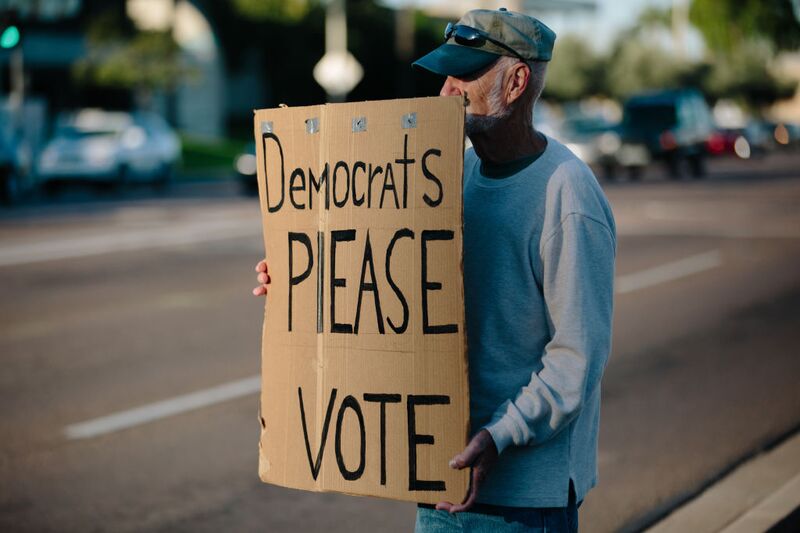
Soon enough. Photographer: Caitlin O'Hara/Bloomberg
There are so many prospective 2020 Democratic presidential candidates that you need a scorecard to keep track. Almost all of them mean to be taken seriously; there’s not a Dapper O'Neil in the bunch.
For those not versed in Boston political lore, Albert “Dapper” O'Neil was a colorful local politician who ran for mayor in 1967, getting less than 1 percent of the vote. But as chairman the Boston Licensing Board, he did put himself in a position to attract hefty donations from tavern owners. By contrast, none of the present-day Democratic presidential hopefuls are in the contest for a shakedown — or a K Street lobbying job or a lucrative turn as a cable television analyst.
Bloomberg
With the first presidential primary more than a year away, it would be grossly premature to try to single out a favorite now. But it’s not too soon to divide the potential candidates into brackets, as for a college basketball tournament, anticipating a contest that winnows down the contenders first within their lanes and then between them.

The Insider Bracket

In one category are established officeholders led by former Vice President Joe Biden. Experienced, knowledgeable, honest and respected across the political divide, Biden’s blue-collar roots and blunt-spoken persona make his fans think of him as the perfect foil to President Donald Trump. He has a deep network of able political operatives and fund-raisers. He's also 76 years old, notoriously gaffe-prone, and has twice flamed out on the presidential stump.
Michael Bloomberg, the former mayor of New York and owner of Bloomberg LP, parent company of Bloomberg Opinion, spent some $80 million to help elect a Democratic House this November. He was a successful three-term mayor, but the ex-Republican faces resistance from party liberals and isn't a gifted retail politician, a premium in the first two nominating contests in Iowa and New Hampshire.
Terry McAuliffe, former governor of Virginia and national party chair, would bring political charm and is a favorite of Bill and Hillary Clintons, a mixed blessing.
Ohio Senator Sherrod Brown is a liberal who has been in Congress for more than a quarter-century and in elective office since 1974. He could win in purple-red Ohio, but may lack the ambition needed to endure what is sure to be a punishing race.
If Biden runs, which is far from a certainty, he would begin as the favorite in this lane.

The Liberal Bracket

Senators Bernie Sanders of Vermont and Elizabeth Warren of Massachusetts are favorites of the party's robust left wing. Sanders built up a core of committed supporters in his unsuccessful nomination challenge to Hillary Clinton in 2016. Warren has the potential for a wider appeal.
Others in this group might include Tom Steyer, a hedge-fund billionaire turned liberal philanthropist, who has thrilled some activists with his drive to impeach Trump. He has never held or run for political office.
More impressive is U.S. Representative Beto O'Rourke of Texas, who appeared more liberal than he really is by running a strong challenge this year against the right-wing candidacy of Republican Senator Ted Cruz. O'Rourke excites young voters who see him as an eloquent, optimistic second coming of Barack Obama 12 years ago. That's a nice thought, but it’s also a reach.
Put early money in this bracket on Warren.

The Diversity Bracket

Two freshmen African-American senators, Kamala Harris of California and Cory Booker of New Jersey, have also invited comparisons to Obama. Both appear to be readying a run.
Others in this lane include the former U.S. housing secretary and mayor of San Antonio, Texas, Julian Castro, and Senators Kirsten Gillibrand of New York and Amy Klobuchar of Minnesota.
Harris has the most upside potential.

The Outsider Bracket

This lane features a couple of governors, Steve Bullock of Montana and John Hickenlooper of Colorado, and two mayors, Eric Garcetti of Los Angeles and Mitch Landrieu, who presided in New Orleans from 2010 until May of this year.
Given the anti-Washington sentiments of many voters and a history of Democrats winning when they turn to outsiders, if one of these candidates takes off early he could walk in the path blazed in 1976 by Jimmy Carter, who rose to the White House from near-obscurity as a little-known governor of Georgia on the strength of early victories in Iowa and New Hampshire.
I like the chances of Landrieu, a good retail politician who has appeal to African-Americans, a voting bloc that’s especially critical in the early South Carolina primary, and also appeals to business-oriented Democrats.
In a final four of bracket winners, almost anything could happen. Party power brokers will have less say than ever before after Democrats foolishly downgraded the nominating role of elected officials. So it’s hard to predict any outcome, but here’s one possible new wrinkle. Electability rarely has been a voting issue for Democrats, but this time – more than ideology, age or geography – an edge may go to the candidate seen as best able to end the Trump nightmare.
    This column does not necessarily reflect the opinion of the editorial board or Bloomberg LP and its owners.
    To contact the author of this story:
    Albert R. Hunt at ahunt1@bloomberg.net

    Wednesday, December 26, 2018

    Europe's Budget Compromises With France and Italy Come at a Cost - Bloomberg

    Europe's Budget Compromises With France and Italy Come at a Cost - Bloomberg


    my comment:


    Let's just say we want more than we can pay for directly and have we maxed out what investors and workers are willing to give up to have government decide how the country's production should be divied up? And, is there a problem is we just print more and more money? Is there a point at which VAT so depresses consumption and exports can't grow enough to support the few jobs supported by high consumer prices where a big chunk of the price goes to the government for redistribution? Also, what happens when the cost of labor is totally eclipsed by low cost imports and digitalization of jobs and production and big factories are replaced with 3D printing. Is everything being spent on benefits or is money being invested for the future; and, is it better to have those with an incentive to produce for demand and productive use of resources make economic and investment plans or to have those with a feel good attitude decide and ignore economic fundamentals? I guess this beginning plethora of interactions is beyond most people's level of interest - i.e. complex interactions do lead to the "eyes glaze over" conditions.

    Tuesday, December 25, 2018

    Bloomberg - Bloomberg

    Bloomberg - Bloomberg


    There are many reasons to be optimistic about 2019. The increasingly isolated man in the Oval Office is not one of them.
    With the first two years of Donald Trump’s presidency drawing to a close, the past week all too perfectly exemplified its destructive effect on competent government in Washington — and it should give all Americans, in all parties, cause for concern.
    On Thursday, one of the last remaining seasoned and respected professionals at the top of the administration announced his resignation, for reasons he explained in a letter that was as courteous as it was devastating. On Saturday, government services were (yet again) shut down because of the quarrel between Congress and the White House over the president’s obsession with a border wall that won’t work but will waste billions of taxpayer money. And in between, the stock market dove to its worst week since 2011, as investors concerned about Trump’s taste for trade wars delivered a vote of no-confidence.
    Each of these mistakes has a common denominator: Trump’s recklessly emotional and senselessly chaotic approach to the job.
    At the halfway mark of this terrible presidency, one has to wonder how much more the country can take.
    The president’s decision to withdraw U.S. forces from Syria, which jeopardized military success in a crucial battle and betrayed an ally as well, led James Mattis to quit in protest. He is the first defense secretary to do so since the position was created in 1947. His resignation letter is meticulously calm and respectful — and all the more brutal as a result. Every American should read it.
    He wrote: “While the U.S. remains the indispensable nation in the free world, we cannot protect our interests or serve that role effectively without maintaining strong alliances and showing respect to those allies.” He added: “I believe we must be resolute and unambiguous in our approach to those countries whose strategic interests are increasingly in tension with ours.”
    Mattis understands that the two principles — which have served America well since World War II — must not be separated. And that gives what comes next such force: “Because you have the right to have a Secretary of Defense whose views are better aligned with yours on these and other subjects, I believe it is right for me to step down from my position.”
    In short: One of the few people protecting Trump from Trump is leaving. And unfortunately, few Republicans in Congress have shown any appetite for that job, preferring instead to appease his worst instincts — as the debate over a wall along the U.S.-Mexican border continues to show.
    Even if a wall were a good idea — and it is not — a government shutdown would be a dumb way to pursue it. The Democrats have just won control of the House of Representatives. The country has given them a full share of responsibility for making decisions about public spending. Does the president expect to override this reality by maneuvering to shut down the government? His penchant for ignoring reality — evident in so many other areas, including climate change — apparently extends to elections.
    This weekend, he imposed needless costs on government workers and on the country at large — not to accomplish anything, or to defend any principle, but to pander to the extreme wing of his party and rage at being thwarted.

    Monday, December 24, 2018

    Annual State of the City’s Economy and Finances : Office of the New York City Comptroller Scott M. Stringer

    Annual State of the City’s Economy and Finances : Office of the New York City Comptroller Scott M. Stringer


    ($ in millions)FY 2019FY 2020FY 2021FY 2022Change
    FY 2019 – FY 2022
    Dollar      Percent
    General Property Tax$27,974$29,477$30,891$31,880$3,90614.0%


    Nov 29, 2018 - The slowdown began at the time of a stock market rally and record-low New York City unemployment—factors that typically accompany strong real-estate sales ...

    Real Estate Data for New York

    New York market trends indicate a decrease of $96,000 (-7%) in median home sales over the past year. The average price per square foot for this same period fell to $1,443, down from $1,477.

    Pompeii horse found still wearing harness - BBC News

    Pompeii horse found still wearing harness - BBC News