Sunday, March 26, 2023

The Moorish invention that tamed Spain's mountains - BBC Future

The Moorish invention that tamed Spain's mountains - BBC Future

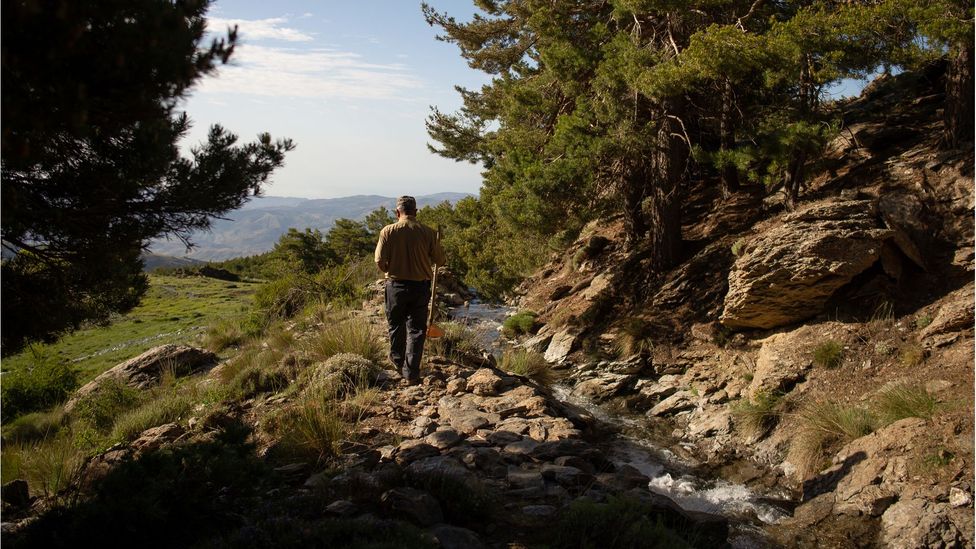
Jose Antonio Peña walks alongside an acequia that has been functioning continuously since the Middle Ages (Credit: Kira Walker)
An ancient Moorish invention has been providing water to the Sierra Nevada mountains for more than 1,000 years, making life possible in one of Europe's driest regions.

In the warm air of an early-June morning, Jose Antonio Peña walks along a channel of gushing water in the Sierra Nevada of southern Spain. Traversing the rocky terrain and ducking beneath boughs of pine, he eventually reaches a grassy meadow on his left. The ancient artificial channel, known as an acequia, empties into the meadow, where its water branches into meandering streams that soak into the mountainside.

Throughout the spring thaw, Peña makes several trips a week from nearby Mecina-Bombarón – a whitewashed village on the southern slope of the mountain range – up a winding, potholed dirt road to monitor the acequia's level and flow, making adjustments as needed. The entire village depends on his actions – where the water flows now, in spring, determines where it will eventually end up when the summer comes.

For over a millennium, this acequia – from the Arabic as-saqiya, meaning "water conduit" or "water bearer" – has provided irrigation and drinking water to Mecina-Bombarón, enabling survival and agricultural prosperity in the semi-arid environment. The methods used by acequieros – people with expert skills in water catchment and allocation – to tend the channels today differ little from those used in the Middle Ages.

The channel is part of a 3,000km (1,800 mile) irrigation network built by the Moors across the Sierra Nevada between the 8th and 10th centuries. The Islamic water management techniques introduced from the east transformed the landscape and agriculture in what was then Al-Andalus. Acequias made life possible for agrarian communities, conserving and distributing scant and seasonal water resources throughout the rugged mountains. In the newly fertile conditions, the abundance of crops introduced by the Moors thrived, among them almonds, artichokes, chickpeas, aubergine (eggplant), lemons, pomegranates, spinach, quince, walnuts and watermelon.

While this ancient system is needed now more than ever, it's threatened like never before

Though ancient, this traditional water management system is sustainable, efficient and resilient.  As climate change worsens, the network will become even more important for helping communities in the Sierra Nevada cope and equitably share an increasingly scarce and unpredictable resource.

While this ancient system is needed now more than ever, it's threatened like never before. As traditional irrigation systems struggle with a lack of profitability compared with intensive agriculture and the rural exodus continues, increasingly few people still hold the skills and knowledge required to maintain acequias.

Jose Antonio Peña observes water as it's diverted from an acequia into a sima, part of a traditional system that provides water in the dry season (Credit: Kira Walker)

Jose Antonio Peña observes water as it's diverted from an acequia into a sima, part of a traditional system that provides water in the dry season (Credit: Kira Walker)

Each year, when the warmth of spring returns to the Sierra Nevada and the thaw begins, snowmelt is diverted from the headwaters of rivers into earthen, porous channels dug into the mountainside. As water flows through the gently descending acequias, ranging in length from tens of metres to kilometres, it's diverted to areas along the upper valley known as simas, where the channel empties and seeps into the ground, a process known as "sowing water". As water percolates through the subsoil, it replenishes aquifers and feeds springs and streams that emerge further down the mountain. The acequias of the Sierra Nevada are the oldest underground aquifer recharge system on the European continent, dating back more than 1,200 years.

Based on knowledge transmitted from generation to generation, acequieros like Peña understand the subterranean routes water takes. Where water is sown high in the valley determines where it eventually surfaces downslope, where it can be "harvested" to irrigate orchards, crops and gardens throughout the thirsty summer months. Without this system, most snowmelt and rain would flow quickly off the steep slopes as runoff in rivers. Sowing water slows the flow of water from the mountains, extending its availability for when it's most needed during the dry season.

Through research on sowing water, "we've found the river…has fewer peak flows and contains a more constant flow throughout the year," says Sergio Martos-Rosillo, a hydrogeologist at the Spanish Geological Survey. Research has also demonstrated how sowing water doubles the recharge of water in aquifers. The system follows the principles of ecohydrology, which uses "the regulating effect of vegetation, soil and aquifers, imitating nature to regulate water, instead of building concrete structures that alter the flow of water upstream and downstream", he says.

Water sowing and harvesting systems could be replicated in mountainous areas elsewhere in the world, where the geological and hydrological conditions are similar to those of the Sierra Nevada, Martos-Rosillo adds, noting there is interest in several Andean countries. In some areas, such systems already exist – one indigenous water management system developed independently in Peru around 1,400 years ago uses similar principles, which the government has been investing in to revive.

Snowmelt and rainfall runoff from the peaks of the Sierra Nevada is diverted into acequias, which channel water towards infiltration zones called simas (Credit: Kira Walker)

Snowmelt and rainfall runoff from the peaks of the Sierra Nevada is diverted into acequias, which channel water towards infiltration zones called simas (Credit: Kira Walker)

While the global potential of these water sowing techniques is perhaps underutilised, each area poses its own specific opportunities and challenges.

Standing in a sima, surrounded by rivulets of water, Peña, who became an acequiero three years ago and works in construction when not tending acequias, says he learned how the system works by accompanying his grandfather and uncle to the waterways as a young boy. Dressed in rubber boots and with a wooden hoe-like tool known locally as a leguna in hand, he nudges rocks and clears away grass, ensuring water flows unobstructed as it enters the sima. The work is repetitive and can be physically demanding. At nearly 10km (6 miles), with 15 simas spanning its length, the acequia providing Mecina-Bombarón with water is the largest in the Sierra Nevada.

Without these ancestral water channels, life as it now exists here would not be possible. No one knows this better than those who depend on the water, which is why the acequia in Mecina-Bombarón has been kept in continuous use for over a thousand years, having weathered many social, cultural, political and environmental changes. "The acequia is the life of the village. Without the acequias, all these villages would be a dryland, all these farms would be dry. It was very well planned," says Matilde Ruiz, who has lived her entire life in the village, standing in front of her garden planted with aubergine, lettuce, garlic and onions.

Water is normally sown until the end of June. But this year was far from normal. First, the snow came late, so it didn't freeze as solidly. Then, a heatwave arrived mid-May, accelerating the thaw. By early June, most snow had melted and water levels were low. And then another sweltering heatwave began mid-June. Peña says once-predictable weather patterns are gone: "Before, it snowed when it was supposed to snow, and the storms arrived when they were supposed to arrive." Now, neither snow nor rain behave as they used to, he says.

These shifts are a signal of what's to come in southern Spain, among Europe's driest and most climate-vulnerable regions. As summers become hotter and longer and winters milder and drier, learning how to cope with worsening water scarcity and prolonged droughts is taking on new urgency. Because acequias are resilient, efficient and a cost-effective way to provide water for communities and small-scale agriculture during the dry season, they're considered a vital tool to adapt to the region's changing climate.
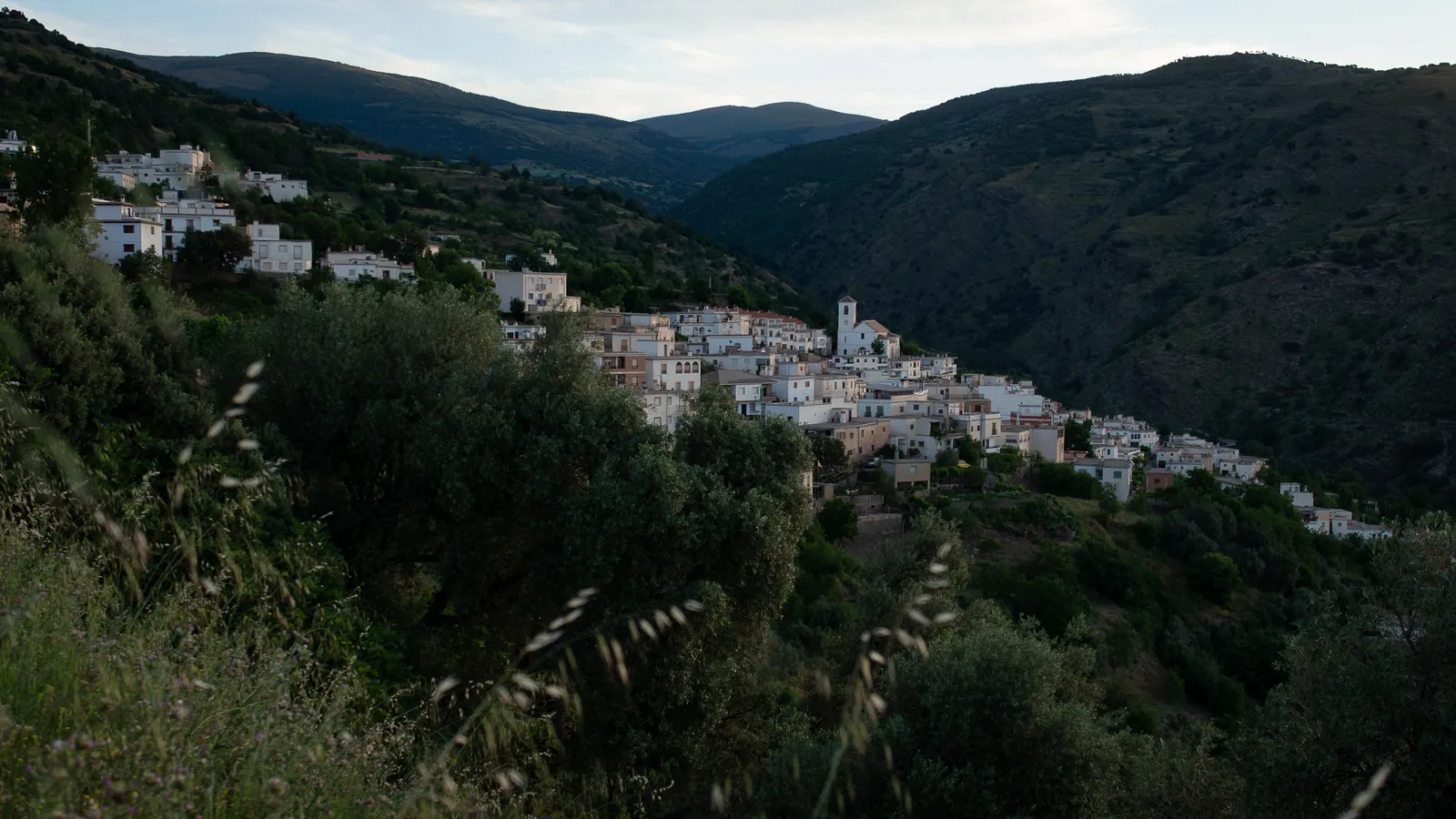
Since the channels were built over 1,000 years ago, acequias have sustained settlements like village of Mecina-Bombarón (Credit: Kira Walker)

Since the channels were built over 1,000 years ago, acequias have sustained settlements like village of Mecina-Bombarón (Credit: Kira Walker)

When water sowing systems flow they provide numerous ecological benefits, too. Where such systems are used in Ecuador, biodiversity is higher than in areas where they haven't been implemented. In New Mexico, the channels function as ecological corridors, enhancing plant cover and diversity, which reduces soil erosion, and supporting wildlife habitat. In the Sierra Nevada, which also experiences the above benefits, irrigation made possible by acequias maintains pastures for grazing and supports crop diversity, bolstering local food security.

With the acequia, the life we have here is very different. They're magnificent – María José Estévez Villalba

In Spain as in Latin America, sowing water is a system of communal governance dependent on principles of equity, cooperation and trust. Water users share responsibility for maintaining and cleaning acequias, which favours social cohesion. Ensuring water is distributed fairly is just one of many challenges Peña must navigate in his role, which is as much about managing people as it is about managing water. "An acequiero has to be impartial, like a referee," he says.

In some villages, like Mecina-Bombarón, acequias have flowed continuously since the Middle Ages. Others were less fortunate. From the 1960s onwards, people began leaving the countryside in droves for cities across Spain and Europe in search of better lives. Widespread rural depopulation caused villages to fall into a state of decline, and many acequias – an estimated 15-20% of the Sierra Nevada's total – were abandoned and fell into disuse. When people left, with them went knowledge accrued over centuries.

To reverse this trend, a project established in 2014 by the Laboratory of Biocultural Archaeology at the University of Granada has been working to restore abandoned acequias and recover the flow of water, and traditional ecological knowledge, to villages across the Sierra Nevada. To date, the Memolab project has restored 14 acequias and cleaned 30 others. While the project's primary objective is to revive acequias, it's also a social intervention, says project coordinator José María Martín Civantos, an archaeology professor at the university. "We try to improve the governance of the community, to empower the community, to promote the dynamisation of the community and the recovery of knowledge and practices," he says.

The practice of sowing water ensures its availability for irrigating crops, orchards and gardens throughout the dry season (Credit: Kira Walker)

The practice of sowing water ensures its availability for irrigating crops, orchards and gardens throughout the dry season (Credit: Kira Walker)

The restoration projects are a way to provoke debate about agrarian and environmental policies, cultural heritage and values and address local tensions, says Civantos. "When there's an acequia that was abandoned 20, 30 or 40 years ago, you need to restore social distribution of water. That means you have to recover part of the knowledge and practices, and that also means conflict," he says. "But those conflicts are positive because that means the community is alive."

On the other side of the Sierra Nevada, in the village of Jérez del Marquesado, the benefits of restoration are tangible, says María José Estévez Villalba, secretary of the local irrigation community. "We compare villages next door [without acequias] that have drought, which we don't have. With the acequia, the life we have here is very different," she says. "They're magnificent. Whoever sees them, they understand."

With over 24,000km (15,000 miles) of acequias and 550 irrigation communities across the Andalusian provinces of Granada and Almeria, wider restoration could bring climate, environmental and social benefits to many. Yet despite their potential, acequias remain undervalued and getting support for further restoration is not easy, says Civantos.

The lack of support is related to the growth of high-tech, industrialised agriculture, Civantos says, as well as a lack of understanding of the acequias or their benefits. When efficiency is considered in terms of productivity, traditional agrarian systems, with their lower output, cannot compete with industrial agriculture. "But if we consider efficiency from a multifunctional perspective, traditional systems should be considered extremely efficient because they provide us with so many ecosystem services."

The practice of sowing and harvesting water can help communities adapt to climate change (Credit: Kira Walker)

The practice of sowing and harvesting water can help communities adapt to climate change (Credit: Kira Walker)

According to Civantos, at the heart of the issue is how the rural world, and those who inhabit it, are often perceived. Lack of acknowledgement for agrarian activities and those who work the land, rooted in long-standing marginalisation and prejudice, pushes people towards other types of work that are better-regarded, he explains. Add in the low profitability of small-scale agriculture, making it near impossible to compete with the industrial model, and people, especially younger generations, have had enough. So they continue to leave.

Peña, who at 61 thinks he has only a few years left in him as an acequiero, is concerned the village's acequias will be abandoned. "That's why I'm here, because there aren't any young people. All these customs are being lost and young people don't want to know about it," he says. "They just put the glass under the tap, they don't know where the water comes from."

Carmen Aguilo, a fourth-year archaeology student at the University of Granada who has assisted several restoration and cleaning projects, thinks more awareness about acequias is needed if they are to survive. Starting in schools, she sees a need "to teach the values and the importance of water in general, as well as working with local people so that they understand this is also a heritage that has been bequeathed to them".

CARBON COUNT

The emissions from travel it took to report this story were 16kg CO2. The digital emissions from this story are an estimated 1.2g to 3.6g CO2 per page view. Find out more about how we calculated this figure here.

Ultimately, much of the acequias' fate rests with communities themselves. "At the end of the day we can go, we can help, we can start them up, we can clean them, but they're the ones who are going to have to take care of their maintenance and social organisation," says Aguilo. "In some places, they'll probably be very successful if the community gets involved. And in other places, if there's no involvement, they'll probably end up being lost. It's a shame."

Peña is pinning his hopes on children; reckoning that like him, exposure early on will help foster an appreciation for acequias that will translate into their preservation. In late May, he made a proposal to the municipal council to take children on excursions to see acequias and learn where their water comes from – a rich legacy they all share a stake in, but which they otherwise might not learn about. The mayor responded favourably, but the proposal has not yet moved forward.

Without sufficient people committed to preserving the acequias, this ancient system that has withstood so much may finally cease flowing. For Peña, it's a heartbreaking prospect. "The acequias are the most important thing we have in the village," he says. "If there's no water here, people can't live."

Bank Failures and the Return of MBS - Mauldin Economics

Bank Failures and the Return of MBS - Mauldin Economics

Bank Failures and the Return of MBS

Bank Failures and the Return of MBS


“History never repeats itself, but it does often rhyme.” –Mark Twain

Mortgage-backed securities (MBS) seem to pop up every time there is a bank failure. 

Back in ’08, they nearly brought down the global financial system. Wall Street aggregated pools of what turned out to be bad loans, sliced them into tranches, slapped a pretty credit rating on them, and stuffed pension funds and banks with what were billed as safe investments.

The story is different today. The loans underlying MBS are considered far safer than the ’08/’09 vintages. Yet they played a key role in the demise of Silicon Valley Bank. SVB had over $75 billion in agency MBS on its books. That was not the problem. SVB mismanaged—or flat out didn’t manage—its interest rate risk. 

As the Fed hiked interest rates at an unprecedented but well-advertised pace, SVB’s portfolio of MBS declined in value. And as deposits left the bank, SVB was forced to sell some of its MBS and US government bond portfolio. By realizing the loss, SVB exposed its poor interest rate risk management and trigged a bank run. 

My guest this week, Barry Habib of MBS Highway, breaks down in detail where SVB got it wrong and how mortgage-backed securities worked against the bank. 

You can find a transcript of our discussion here. 

C+MBS = Trouble

SVB’s problems were more about risk management than real estate loans, but that doesn’t mean there aren’t problems in the world of MBS.

Commercial real estate, specifically office space, is in serious trouble.

Liquidity in the office sector is drying up. The latest banking crisis will only make it worse. Approximately $17 billion in office-backed Commercial MBS (CMBS) is due for refinancing in 2023.

PIMCO, Brookfield, and even Blackstone (!) have defaulted on CMBS notes this year. If the biggest, most respected players in the space are handing back the keys, others will follow suit.  

This sets up a serious problem for cities, particularly cities with aging office inventory. 

Here’s an example: Say you are a real estate investor. In 2016, you paid $50 million for a Class B office building. You borrowed 70% of the purchase price, or $35 million. Your note was at 3% and your loan amortized over 30 years, with a seven-year term. 

You have to refinance your note this year, but the lending landscape has completely changed. Your building might be one-third empty due to the work-from-home trend. Even if the leases are still in place, if the leased space is not fully occupied, lenders might not underwrite your revenue the same way they would have in 2016 due to increased renewal risk. 

Banks might not take your deal, forcing you to look elsewhere for a refi. Loan-to-value expectations are closer to 50% if you can find the debt, and your interest rate will be approximately 7%. Since your loan was amortizing over 30 years, you’ve barely put a dent in your principal.

What are your choices? You can bring another $10 million in equity to the table to get your new loan, or you can default. 

This is a simplification, but not by much. It’s hard to extend or restructure a loan that has been securitized because you aren’t dealing with one lender—you have hundreds. 

Now let’s consider the city where your office building is located. Cushman & Wakefield estimates up to 25% of US office buildings will be obsolete by the end of the decade. The best office buildings will have a better shot at attracting and retaining tenants. Tenants are requiring less square footage. And credit is hard to come by. All of this adds up to a vacancy problem that is hard to fix.

One answer seems obvious: convert the office space into much-needed housing. Office space is notoriously difficult to convert. You need a very low-cost basis for an office-to-residential conversion to make sense. Lenders will be reluctant to take that big of a bath. They may rather sit on the asset, hoping for a turnaround. 

City managers who see this coming should act now to put incentives in place to facilitate the conversion of office buildings to new uses. Those who do will maintain or even revitalize their urban cores and office suburbs. I suspect most will be caught flat-footed. 

I checked with my friend Joe Anthony of Sterling Legacy Real Estate. He invests in multifamily, but he’s plugged in when it comes to corporate real estate. I asked him for his take on office buildings. His reply:

“I think we will see vacant office space for many years to come. The value transition may be similar to what retail went through years ago. However, the adaptive reuse of large buildings will be more difficult. I would not touch an office investment with a 10-foot pole.”

Thanks for tuning in to Global Macro Update. And don’t forget to register for our Strategic Investment Conference. Howard Marks will be back, along with Louis Gave, Barry Habib, John Burns, Lacy Hunt, Jim Bianco… and a few new friends I’ll think you’ll want to hear from. 

Are you a city planner? A CMBS issuer? Investor in office buildings? Do you have insight into this problem? Please take a minute to reply to this email. We want to hear from you.

Best regards,


Ed D’Agostino
Publisher & COO

If you prefer to listen to Global Macro Update, you can do so here:

Thursday, March 23, 2023

Anne Eisenhower’s spectacular jewellery collection | Christie's

Anne Eisenhower’s spectacular jewellery collection | Christie's

‘Once you’ve seen them, you’ll never forget them’: Anne Eisenhower’s spectacular jewels

Marlene Dietrich’s iconic Van Cleef & Arpels ruby and diamond bracelet stars in the collection of the late philanthropist, interior designer and granddaughter of Dwight D. Eisenhower

When asked by Architectural Digest in 1990 — the same year she was named one of the publication’s Top 100 designers — to describe her interior design style, Anne Eisenhower responded, ‘Traditional, but for today’s living: comfortable, with a “lived-in” look; uncluttered without appearing austere.’ As known for her humble character as for her undeniable glamour, the late philanthropist and designer approached all aspects of her life with that same sense of effortless grace.

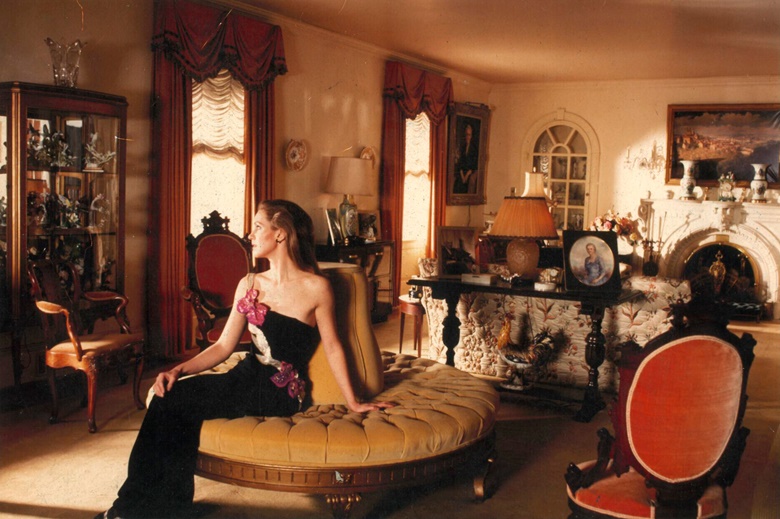
Anne Eisenhower seated in her grandparents home, the Eisenhower Farm in Gettysburg, Pennsylvania, which is now a national historic site
Anne Eisenhower seated in her grandparents' home, the Eisenhower Farm in Gettysburg, Pennsylvania, which is now a national historic site

‘She was the sort of person that when she walked into a room you noticed her, not because she was over the top, but because she sailed in and was simply an elegant presence,’ recalls Lisa Hubbard, Christie’s Jewellery Senior Advisor, who shared a decades-long friendship with Eisenhower. In addition to Anne’s ‘wicked sense of humour’, Hubbard bonded with her over a deep appreciation for jewellery. But it was only later in life that the advisor would discover her friend’s trove of treasures worn during her heyday on the New York City social scene, chockful of black-tie charity galas.

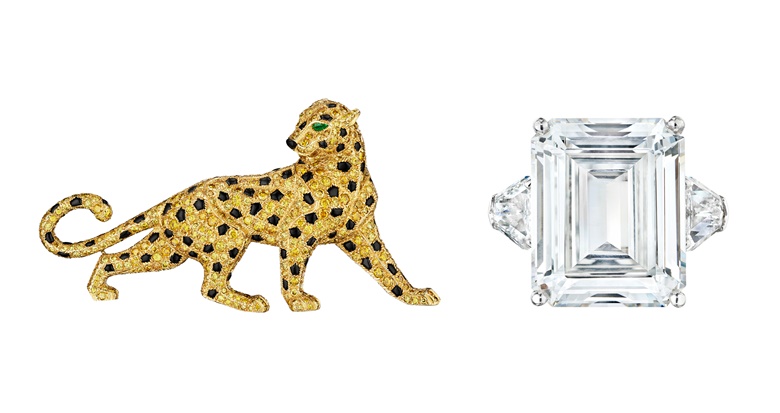
Left Cartier coloured diamond, onyx and emerald ‘Panthère de Cartier’ brooch. Estimate $100,000-150,000. Right An important diamond ring, emerald-cut diamond of 20.54 carats. Estimate $1,200,000-1,800,000. Both offered in The Magnificent Jewels of Anne Eisenhower on 7 June 2023 at Christie’s in New York

Left: Cartier coloured diamond, onyx and emerald ‘Panthère de Cartier’ brooch. Estimate: $100,000-150,000. Right: An important diamond ring, emerald-cut diamond of 20.54 carats. Estimate: $1,200,000-1,800,000. Both offered in The Magnificent Jewels of Anne Eisenhower on 7 June 2023 at Christie’s in New York

More than 30 of these jaw-dropping pieces will be featured in the Magnificent Jewels of Anne Eisenhower on 7 June during Christie’s Luxury Week in New York. Hubbard expects the public to be as awestruck as she was by the collection, which brims with ‘the big four’ — diamonds, sapphires, rubies and emeralds — as well as exceptional historic and contemporary jewels: ‘Anne had the wherewithal to acquire incredible pieces of jewellery that once you’ve seen them, you never forget them.’ 

A remarkable family history, from the White House to New York 

As the granddaughter of the 34th President of the United States, Dwight D. Eisenhower, and Mamie Doud Eisenhower, Anne was part of one of America’s most distinguished families. The only general to be elected President in the 20th century, Dwight Eisenhower was a national war hero, who led the invasion of Nazi-occupied Europe while Supreme Commander of Allied Forces during World War II. 

During his two terms as President, he proved instrumental in easing Cold War tensions, as well as the creation of the National Aeronautics and Space Administration and the Interstate Highway System. Known as a ‘quintessential First Lady’ and ‘the nation’s hostess’, Mamie was beloved as an enthusiastic and relatable emblem of patriotism.

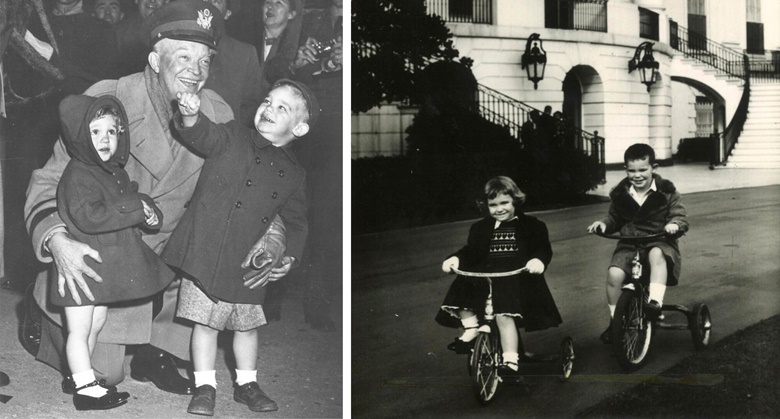
Left President Dwight D. Eisenhower with Anne and David Eisenhower. Right Anne and David Eisenhower visit the White House, 1953. Photograph AP Wirephoto
Left: President Dwight D. Eisenhower with Anne and David Eisenhower. Right: Anne and David Eisenhower visit the White House, 1953. Photograph: AP Wirephoto

Born in 1949 in West Point, New York, Anne spent much of her early childhood in the White House with her siblings. During her teenage years she travelled with her grandparents on the transatlantic ocean-liner Queen Elizabeth to Europe and met French President Charles de Gaulle. Subsequent visits abroad would introduce her to dignitaries, including former British Prime Minister Sir Winston Churchill and Soviet Premier Nikita Khrushchev. Anne’s authentic warmth endeared her to a veritable who’s who of esteemed New Yorkers and international figures. 

‘Unlike my [other] siblings and me, Anne had flair, a creative orientation that flourished in her work as a designer and as an artist. She was drawn not to Washington DC like the rest of us, but to the Big Apple,’ Anne’s sister, Susan Eisenhower, tells Christie’s. ‘She was a New Yorker through and through.’

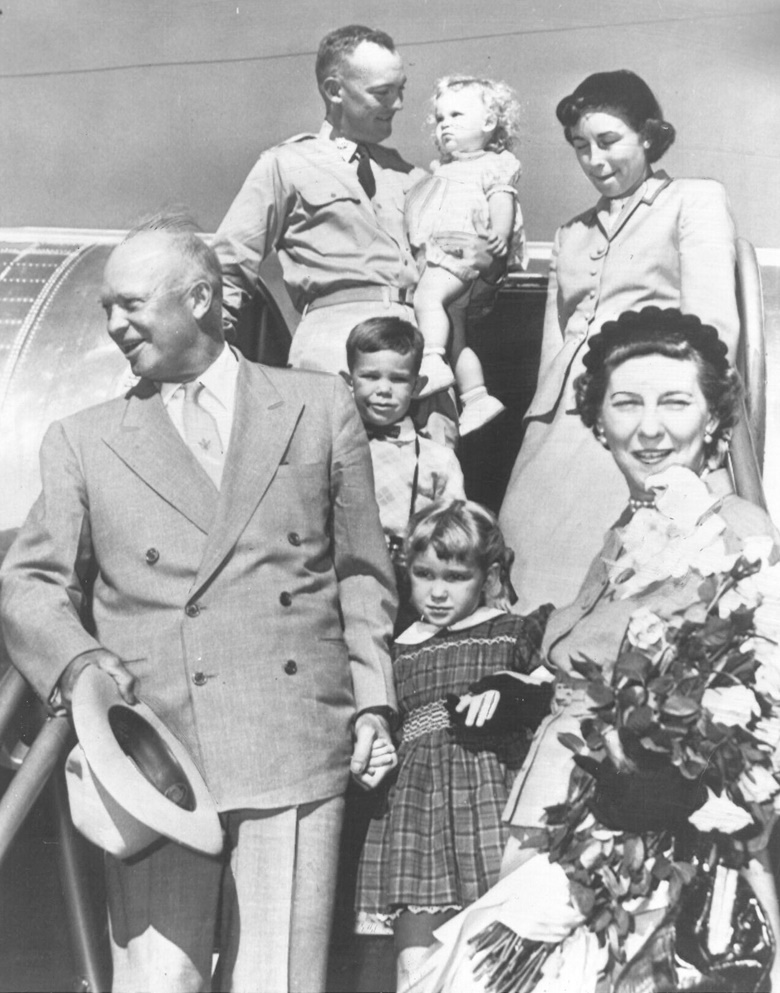
President Dwight D. Eisenhower and Mamie Eisenhower with their son, daughter-in-law and grandchildren, 1953. Anne Eisenhower holds her grandfathers hand. Photograph AP Wirephoto
President Dwight D. Eisenhower and Mamie Eisenhower with their son, daughter-in-law and grandchildren, 1953. Anne Eisenhower holds her grandfather's hand. Photograph: AP Wirephoto

In the late 1970s after working under New York design legend Dorothy Draper, Anne Eisenhower established her eponymous firm, which specialised in traditional residential design. In addition to her Architectural Digest accolade, her work appeared on the covers of Rooms with a View: Two Decades of Outstanding American Interior Design by Chris Casson Madden and 40 Years of Fabulous: The Kips Bay Decorator Showhouse by Steven Stolman. 

Anne was also an ardent philanthropist. She served on the board of Casita Maria Center for Arts & Education for 25 years. Her charitable causes included the Breast Cancer Research Foundation, Metropolitan Museum of Art, the Museum of Jewish Heritage, the American Heart Association, and Eisenhower family legacy work, among others. 

Inside Anne Eisenhower’s jewellery collection 

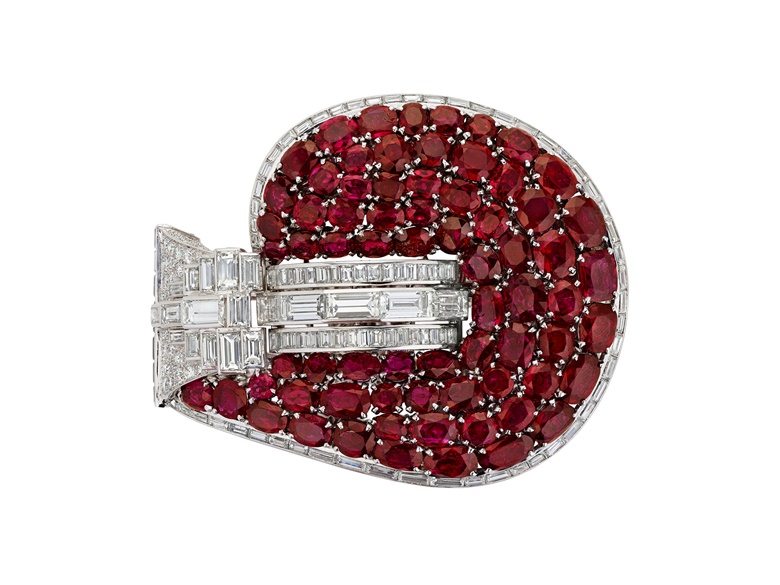
Anne may have been ‘a great New Yorker’, as her friend former mayor Michael Bloomberg described her, but her jewellery is the stuff of Hollywood legend. The star of Eisenhower’s collection is Van Cleef & Arpels’s ‘Jarretière’ ruby and diamond bracelet purchased in 1937 by none other than Marlene Dietrich. The German actress and screen siren famously wore the piece in Alfred Hitchcock’s 1950 film, Stage Fright, followed by the 1951 Academy Awards. Eisenhower acquired the bracelet directly from Marlene Dietrich's estate in 1992, giving the jewel a doubly esteemed provenance.

An exceptional Van Cleef & Arpels ruby and diamond ‘Jarretière’ bracelet. Estimate $2,500,000-4,500,000. Offered in The Magnificent Jewels of Anne Eisenhower on 7 June 2023 at Christie’s in New York

An exceptional Van Cleef & Arpels ruby and diamond ‘Jarretière’ bracelet. Estimate: $2,500,000-4,500,000. Offered in The Magnificent Jewels of Anne Eisenhower on 7 June 2023 at Christie’s in New York

‘Marlene Dietrich’s bracelet is so high drama, so Hollywood, the ultimate of everything — the greatest rubies, diamonds, mounting. It’s like nothing else you’ve ever seen,’ says Hubbard on what can be considered one of the most important pieces of jewellery of all time. ‘Who would have thought that Anne, who was reserved by nature, would be the one who would take it over from Marlene Dietrich?’ 

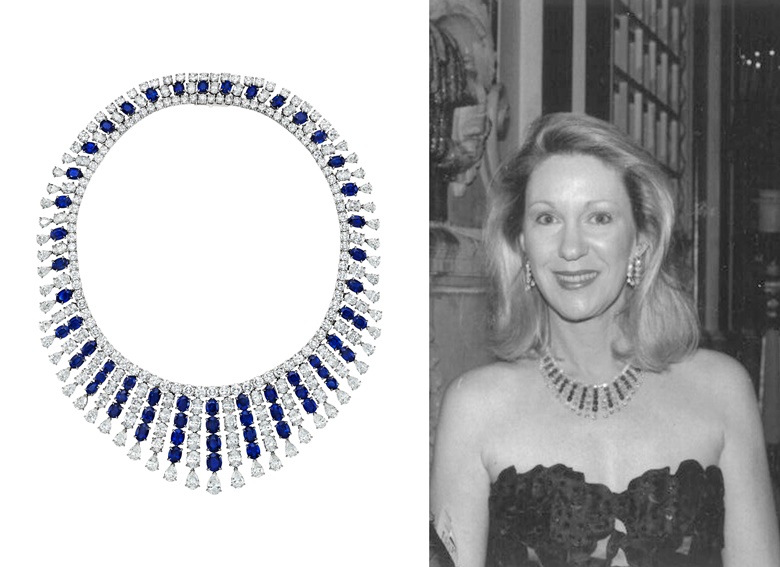
After purchasing the bracelet at auction, Eisenhower enlisted Van Cleef & Arpels to make a complementary necklace and earrings. All three works are being offered in this dedicated sale, along with other contemporary creations bought directly from the jewellery houses. Among Hubbard’s favourites is a sapphire and diamond ‘Waterfall’ necklace and earrings, also by Van Cleef & Arpels. ‘I’d not seen that pattern before, and they’re so flattering,’ she says. ‘They show what good jewellery is all about.’

Left Van Cleef & Arpels sapphire and diamond ‘Waterfall’ necklace. Estimate $300,000-500,000. Offered in The Magnificent Jewels of Anne Eisenhower on 7 June 2023 at Christie’s in New York. Right Anne Eisenhower wearing the Van Cleef & Arpels ‘Waterfall’ necklace, 1997. Photograph © Star Black

Left: Van Cleef & Arpels sapphire and diamond ‘Waterfall’ necklace. Estimate: $300,000-500,000. Offered in The Magnificent Jewels of Anne Eisenhower on 7 June 2023 at Christie’s in New York. Right: Anne Eisenhower wearing the Van Cleef & Arpels ‘Waterfall’ necklace, 1997. Photograph: © Star Black

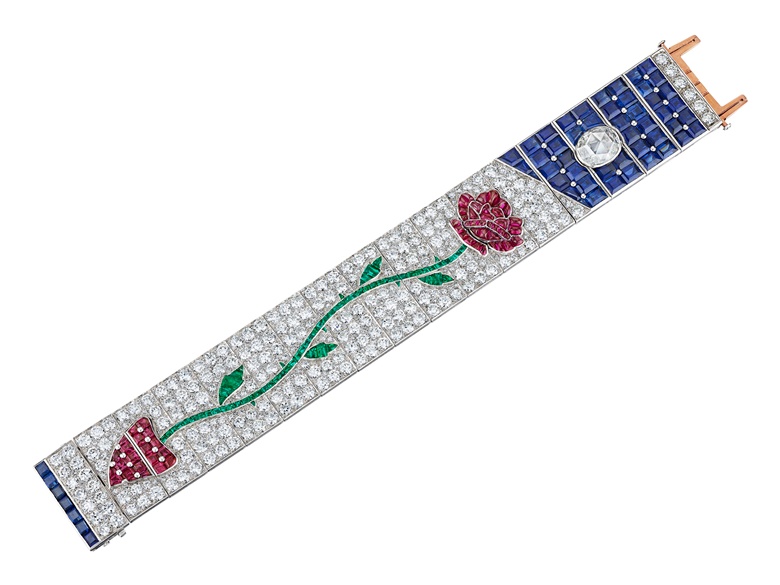
Another historic highlight of the collection is Tiffany & Co.’s diamond and multi-gem ‘Moonlight Rose’ bracelet, which dates to circa 1925. During the Art Deco period, monochromatic geometric designs reigned supreme, making this jewel’s use of coloured stones and its pictorial design extremely rare. 

‘This is a beautifully executed piece of jewellery. It reminds me of a Chinese scroll painting. It’s miniature art,’ says Hubbard, praising the ingenious use of buff-top rubies that form the flower and a rose-cut diamond that represents the moon. ‘For Anne to have both the staggeringly gutsy Van Cleef & Arpels bracelet next to this quiet Tiffany & Co. one, she had all-encompassing taste and saw merit across the board.’

Tiffany & Co. Art Deco diamond and multi-gem ‘Moonlight Rose’ bracelet. Estimate $500,000-700,000. Offered in The Magnificent Jewels of Anne Eisenhower on 7 June 2023 at Christie’s in New York

Tiffany & Co. Art Deco diamond and multi-gem ‘Moonlight Rose’ bracelet. Estimate: $500,000-700,000. Offered in The Magnificent Jewels of Anne Eisenhower on 7 June 2023 at Christie’s in New York

It’s rare for an impeccable eye to be matched in generosity and character, but Anne Eisenhower was just that. As her granddaughter Camila Mendoza tells Christie’s, ‘While these jewels are indeed breath-taking, my grandmother is the real gem that we are celebrating today — and that we will celebrate always.’