The use of GLP-1 drugs has become an unexpected boon for medical spas and plastic surgery clinics that offer wraparound services for patients as they continue on their weight loss journeys. The makers of Botox are expecting to benefit from the trend, too. And some businesses, including Shafer Clinic, are even doling out GLP-1 prescriptions.
Nvidia unveiled its new Blackwell family of processors to succeed the company's current Hopper model, which has been in short supply. The new processors are due out later this year.
Other tech firms were eager to tout their ties to Nvidia, with companies including Google, Microsoft, Oracle, SAP and HP announcing new or expanded partnerships.
Data: Yahoo Finance. Chart: Axios Visuals
Charted above: Another tech company — Super Micro Computer — that's riding the AI wave even farther than Nvidia.
Shares of Supermicro — which makes servers that use Nvidia chips — are up 12-fold in the past 12 months, The Wall Street Journal reports.
Giant robots made by Austin startup Icon began 3D-printing an entire neighborhood of suburban homes in late 2022; this week, the company introduced an AI architect to design them. It’s a technological leap that Icon says could one day spell the demise of cookie-cutter suburbia and usher in an era of low-cost, low-carbon and climate-resilient housing.
“There’s no reason to build ugly-ass spec homes anymore,” Icon founder and chief executive officer Jason Ballard tells me at the company’s headquarters near downtown Austin (while wearing his customary white cowboy hat). “We don’t just need to make housing more affordable; it actually also needs to get better.”
Icon has spent 18 months developing its artificial intelligence program — named Vitruvius after an ancient Roman architect — which uses a chatbot to converse with would-be homeowners about their dream projects. After the user responds to a series of prompts, Vitruvius offers several versions of a house, complete with exterior and interior renderings and floor plans.
For now, humans are still needed to turn those plans into buildable reality. Vitruvius is at least a year away from being able to draw up full construction documents, permit applications, budgets, bills of materials and a building schedule, Ballard says — an ambitious timeline for an untested technology tackling a complex interplay of tasks. But if those processes can be automated, Icon estimates the software could shave at least $100,000 from the price of a home.
Icon co-founder and CEO Jason Ballard stands next to a structure built by the startup’s 3D-printing robot using its new low-carbon concrete. Photographer: Thomas Allison
“Let’s play. What do you want?” Ballard asks me as he launches Vitruvius on a conference room screen and a chat window pops up. I ask the AI to show me a modern 1,500-square-foot, three-bedroom home in the California beach town of Bolinas. “Sounds like you’re envisioning a contemporary one-story home with an open feel,” Vitruvius responds. “Before we proceed with the design, can you tell me more about your lifestyle and how you envision using the space in your home?”
I respond that two people and a dog would live in the house and that I want a seamless flow between home and nature, plus a work space. “Considering your location in Bolinas and desire to integrate with nature, would you like the design to include specific outdoor features such as a deck patio or garden areas?” it asks.
I would. Within seconds, Vitruvius displays a collection of stunning homes and floor plans in a setting that resembles coastal California. The homes include conventional construction as well as a curvy 3D-printed model. (Vitruvius always includes at least one 3D-printed option.)
A rendering of a California house designed for the author by Icon’s new AI architect. Courtesy of Icon
Ballard credits the inspiration for Icon’s AI architect to a chance encounter with OpenAI CEO Sam Altman at a conference two years ago, before the release of ChatGPT triggered an AI gold rush. Ballard told Altman about his idea for architecture software that might eventually add AI. “He said, ‘Your timeline is wrong. You should start building it as an AI system right now,’ and gave me some tips and pointers,” Ballard says.
Maria Paz Gutierrez, an associate professor of architecture at the University of California at Berkeley, says 3D printing “in principle can offer unique advantages to address affordable housing prices issues because it can substantially decrease building time and potentially material usage.”
So is architect the next human job under existential threat from artificial intelligence? Ballard says Vitruvius will relieve architects of onerous design duties like drafting construction documents. Icon is also offering architects an opportunity to profit from its 3D-printing tech if they submit plans to the company’s new catalog of ready-to-print home designs, CodeX.
CodeX is launching with 63 plans for homes, ranging from under $99,000 to well over $1 million. The catalog includes some 40 designs from famed architects Bjarke Ingels Group that take advantage of 3D-printing to create avant-gard wildfire- and storm-resilient homes. (One model, for instance, mounts kitchen cabinets high off the floor to minimize flood damage.)
A rendering of a storm-resilient home designed by Bjarke Ingels Group for Icon’s CodeX catalog. Courtesy of Icon
But Icon’s ability to actually execute on Vitruvius and CodeX designs depends on the company’s next-generation robot, called Phoenix. During my visit, a prototype works across the street to build a large Gaudí-esque structure whose walls ripple across the lot like an infinite wave.
The robot behind Icon’s 3D-printed neighborhood, Vulcan, consists of a crossbar that moves up and down between two towers that travel along fixed rails straddling a building site. A nozzle attached to the crossbar extrudes a proprietary concrete mixture called Lavacrete, which the robot lays down to form the exterior and interior walls of a one-story building.
The nozzle on Phoenix, on the other hand, sits at the end of a 23-foot-long arm attached to a small platform with tank-like treads that can freely rumble around a building site. In Austin, Phoenix’s arm swoops down to the curving 100-foot-long structure, adding layers of Lavacrete to the second story of what will be a 27-foot-tall building when completed.
Phoenix with the completed two-story structure in Austin. Courtesy of Icon
Phoenix’s height and maneuverability give it the capacity to build multi-story structures in more free-flowing designs. It can also build roofs and foundations. And while workers had to manually install rebar to reinforce the walls printed by Vulcan, a spool of galvanized steel cable is extruded inside each layer of concrete Phoenix applies.
Icon estimates that Phoenix will cut the build time for a 3D-printed home in half, to one week, while reducing the cost of the wall system by 30% compared to conventional construction.
The climate cost of Icon’s homes is also falling. While its 3D-printed homes generate little construction waste, concrete’s carbon footprint makes the homes’ emissions substantially higher than wood-frame alternatives. This week, the company unveiled a low-carbon concrete formula called CarbonX that brings the emissions of a 3D-printed home 2% to 6% below those of a same-size wood-frame building over their lifespan, according to an analysis conducted by Icon and MIT.
“This 3D printing allows us to improve the productivity of concrete construction, and newly engineered materials and concrete mix design like Icon’s reduces emissions associated with the production of concrete,” says Hessam Azarijafari, deputy director of MIT’s Concrete Sustainability Hub.
A world in which Icon’s home-building robots execute plans shared directly by its AI architects remains a ways off, but Ballard says that’s the likely future. “Humans will be in the loop at multiple points, but directionally I think that’s correct,” he says. “An AI system isn’t limited in its capacity for memory and intelligence and creativity.”
We know how ultra-processed foods like chips and sugary cereals affect our bodies. New research is digging into how junk food hits our brains.
Why it matters: Beyond elevating risk of obesity, diabetes and heart disease, heavily processed foods can harm mental health, mess with sleep — and even be addictive like alcohol or nicotine.
Some scientists are proposing a new mental health condition — "ultra-processed food use disorder," The Wall Street Journal reports.
State of play: People who consistently eat high-fat, high-sugar snacks demonstrate higher activity in the parts of their brains that create dopamine, according to a study published in Cell Metabolism.
In just eight weeks, participants' brains started to reward them for indulging in junk food. Their desire for low-fat foods started to disappear.
Researchers have discovered other troubling effects:
In one study, some participants were given sugary, processed breakfasts to start their day. Others were given a healthier meal.
Those who had junk food for breakfast didn't perform as well on learning and memory tests.
Zoom in: One way an imbalanced diet affects our brains is through the gut, The Journal notes.
A junk-food forward diet is likely to result in a gut microbiome that is less diverse and has fewer types of bacteria, which work together to boost the immune function and regulate stress.
The bottom line: If you haven't banished ultra-processed foods, many of your other health efforts will be for naught.
No stone unturned: Cosimo Castrucci and the union of art and nature
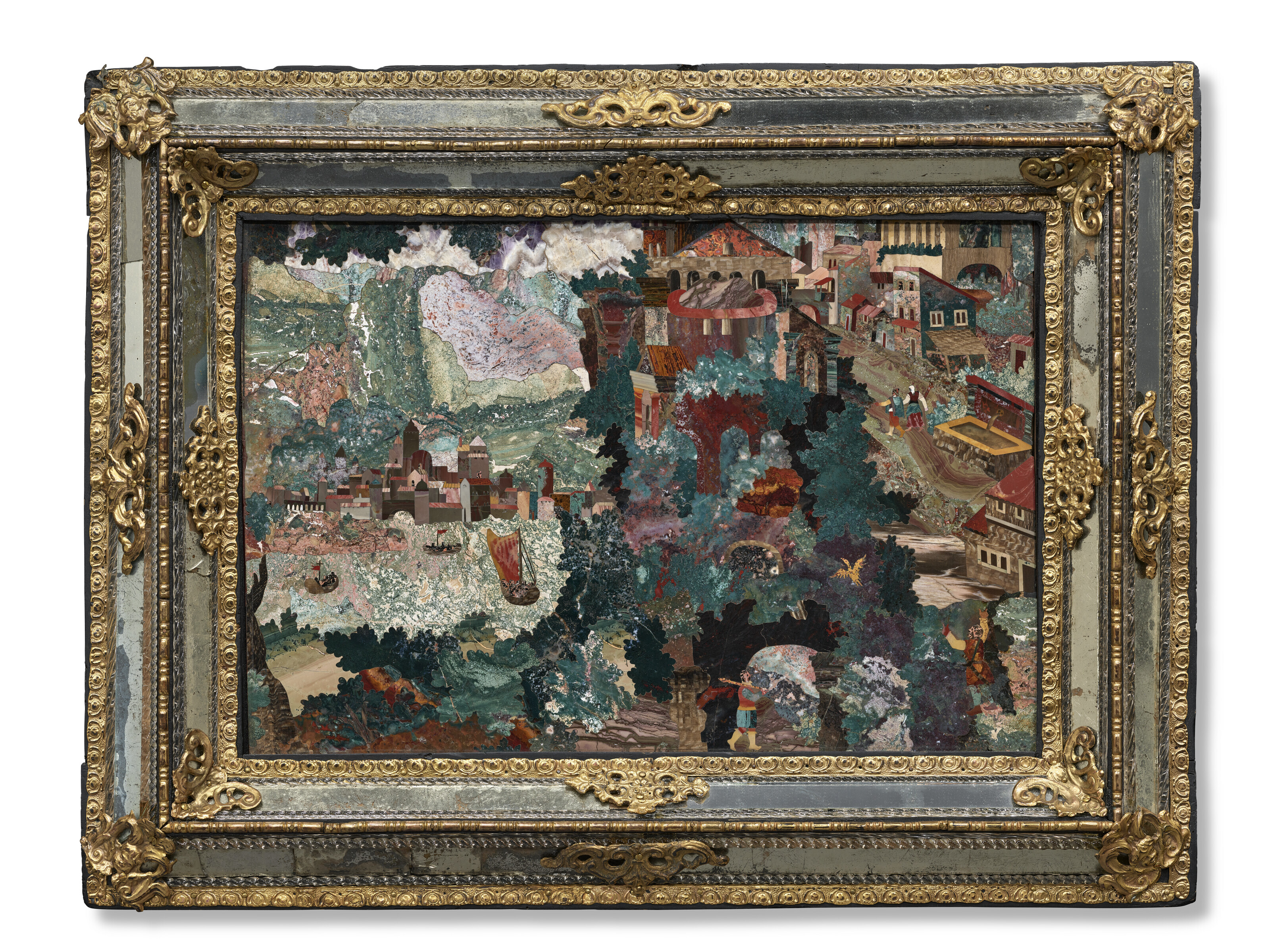
Castrucci was a master of commesso di pietre dure — the making of decorative objects inlaid with semi-precious stones. A rare work attributed to the artist, depicting a panorama of Prague in the years around 1600, is offered in Paris on 12 March
In the final years of the 16th century, Cosimo Castrucci was an artist in demand. Based in Florence and favoured by the Grand Duke of Tuscany, Ferdinando I de’ Medici, he was a master of commesso di pietre dure. This was the making of decorative objects inlaid with semi-precious stones: objects that were ideal expressions of princely wealth and coveted by ruling elites as far afield as Mughal India.
Perhaps the greatest admirer of the art of stone inlay was the Holy Roman Emperor, Rudolf II (r. 1576-1612), and in the 1590s he made Castrucci an offer he couldn’t refuse: a handsome salary, long-term imperial favour, and access to all the stones he could possibly wish for, if he relocated to Prague.
The emperor had moved his court to that city from Vienna at the start of the previous decade, and now sought to found a commesso workshop to rival those in the great Italian centres of production, Milan and Florence. (The latter boasted an official Medici-established workshop, the Opificio delle Pietre Dure, which is still active to this day — though Castrucci seems to have been an independent master who operated outside it.)
By 1592, the emperor had got his man. A passport was issued for Castrucci that year, in which he was described as ‘His Majesty’s gem-cutter’.
History tends to remember Rudolf as a cultivated individual, more interested in filling his palace’s Kunstkammer with wondrous objects than he was in overseeing his empire. It’s true that he would end up being ousted by his ambitious younger brother, Matthias, but his political record isn’t really of concern here.
What matters is the stunning array of artistic and scientific talent he attracted to Prague from abroad. This included the painter Arcimboldo, the sculptor Adriaen de Vries, the astronomer Tycho Brahe, and the mathematician Johannes Kepler — not to mention the magus from Queen Elizabeth I’s court in England, John Dee. (Kepler would famously draw upon Brahe’s research to produce the Rudolphine Tables, a groundbreaking set of calculations of the positions of the planets, duly named after the emperor.)
According to his aunt, Archduchess Maria of Styria, Rudolf II ‘loved only what is extraordinary and miraculous. What he knows, he feels obliged to have.’
From Castrucci’s workshop, the emperor would receive items ranging from tables and cabinets with intricate inlays, to plaques that were hung on walls. Typically, these plaques were framed and rather resembled paintings — however, instead of brushstrokes, they consisted of mosaics of colourful stones.
A fine example attributed to Castrucci is being offered in the Collections sale at Christie’s in Paris on 12 March 2024. It’s a depiction of Prague, with the castle district of Hradčany visible in the upper right. Charles Bridge, over the Vltava River, can be seen on the far left, connecting the city’s two banks. The fluvial scene below it suggests bustling port trade.
One imagines that part of the attraction of moving to Prague for Castrucci was the chance to work with rare local stones that weren’t readily available in Florence — jasper, agate and chalcedony notable among them. These three stones all feature, alongside Italian marble, in the plaque in question, offering a variety of colours and cuts the artist wouldn’t have encountered before.
Castrucci was a master of illusionism and the atmospheric rendering of space. In the Prague cityscape, the grouping of earthy greens and browns in the foreground gives way to hazier pastel colours around the horizon, this graduated placement of stones helping create a credible sense of spatial recession.
Cosimo Castrucci, Landscape with the Sacrifice of Isaac, circa 1600. Pietra dura. Agate and jasper. 43.3 x 57.7 cm. Kunsthistorisches Museum Wien, Kunstkammer
Rudolf left behind few documents in his own hand, so there is a certain amount of conjecture when it comes to explaining his love for commesso di pietre dure. It seems safe to say, however, that it wasn’t purely down to aesthetic pleasure.
According to his biographer, Peter Marshall, writing in The Mercurial Emperor: The Magic Circle of Rudolf II in Renaissance Prague (2007), ‘Rudolf amassed many important works of art and nature, both old and new, from all over… As a learned and cultured monarch, he saw the whole world as a precious cabinet of curiosities to collect and classify.’
The emperor’s collection included fossils, bronzes, ivories, books and manuscripts — as well as scientific instruments, such as a dazzling celestial globe with clockwork by the imperial clockmaker Gerhard Emmoser, now in New York’s Metropolitan Museum of Art.
Giuseppe Arcimboldo (1526-1593), Vertumnus, 1591. Oil on panel. 70 x 58 cm. Skokloster Castle, Sweden. Photo: Bridgeman Images
Rudolf also acquired religious relics, such as a grain of earth from which it was believed God had created Adam, and two iron nails that had purportedly been part of Noah’s Ark. What’s more, he kept an aviary filled with rare birds, including a dodo (brought to Prague from Mauritius) and a cassowary (brought from the Banda Islands of Indonesia).
One of the most famous paintings in the emperor’s collection was a portrayal of him by Arcimboldo, called Vertumnus. It depicts Rudolf as the titular Roman god of plant growth and seasonal change — in the artist’s eye-catching trademark fashion. Which is to say, with the subject’s head and body concocted out of fruits, flowers and vegetables.
Vertumnus marked a union of art and nature which was at the core of Rudolf’s world view. The same was true, in a more literal manner, of Castrucci’s commesso work. Stunning stones, products of the earth millions of years in the making, were patterned together to make stunning objets d’art, products of the Italian’s ingenuity.
Christie’s Online Magazine delivers our best features, videos and auction news to your inbox every week
‘Just as God had created the universe, so Rudolf’s artists… were refashioning and transmuting the Creation,’ wrote Peter Marshall about Castrucci and his workshop. Sadly, the glory days weren’t to last. Castrucci died in the early years of the 17th century, and was succeeded in his atelier by his son Giovanni — after whose own death, in 1615, the artistic heights of old were never again reached.
As for Rudolf, power ebbed inexorably away from him towards the end of his reign — as did his mental health. After he died, in 1612, his collections and court entourage were for the most part dispersed.
Over the course of three decades, however, he had turned Prague not just into the centre of an empire, but into an epicentre of Renaissance refinement. In his quest to achieve the latter, he left no stone unturned.
On view now, the Collections sale takes place at Christie’s in Paris on 12 March 2024. Offering ancient and modern art, decorative arts and design, it includes furniture created by Jacques-Martin Lopez for the Maison de Savoie, as well as collections from the Galerie Gismondi and an apartment on rue du Faubourg Saint-Honoré. Featuring objects collected by Colin Peter Field for the legendary Bar Hemingway at the Ritz in Paris, Collections — The Online Sale runs until 13 March


 Charted above: Another tech company — Super Micro Computer — that's riding the AI wave even farther than Nvidia.


 State of play:
 Zoom in: